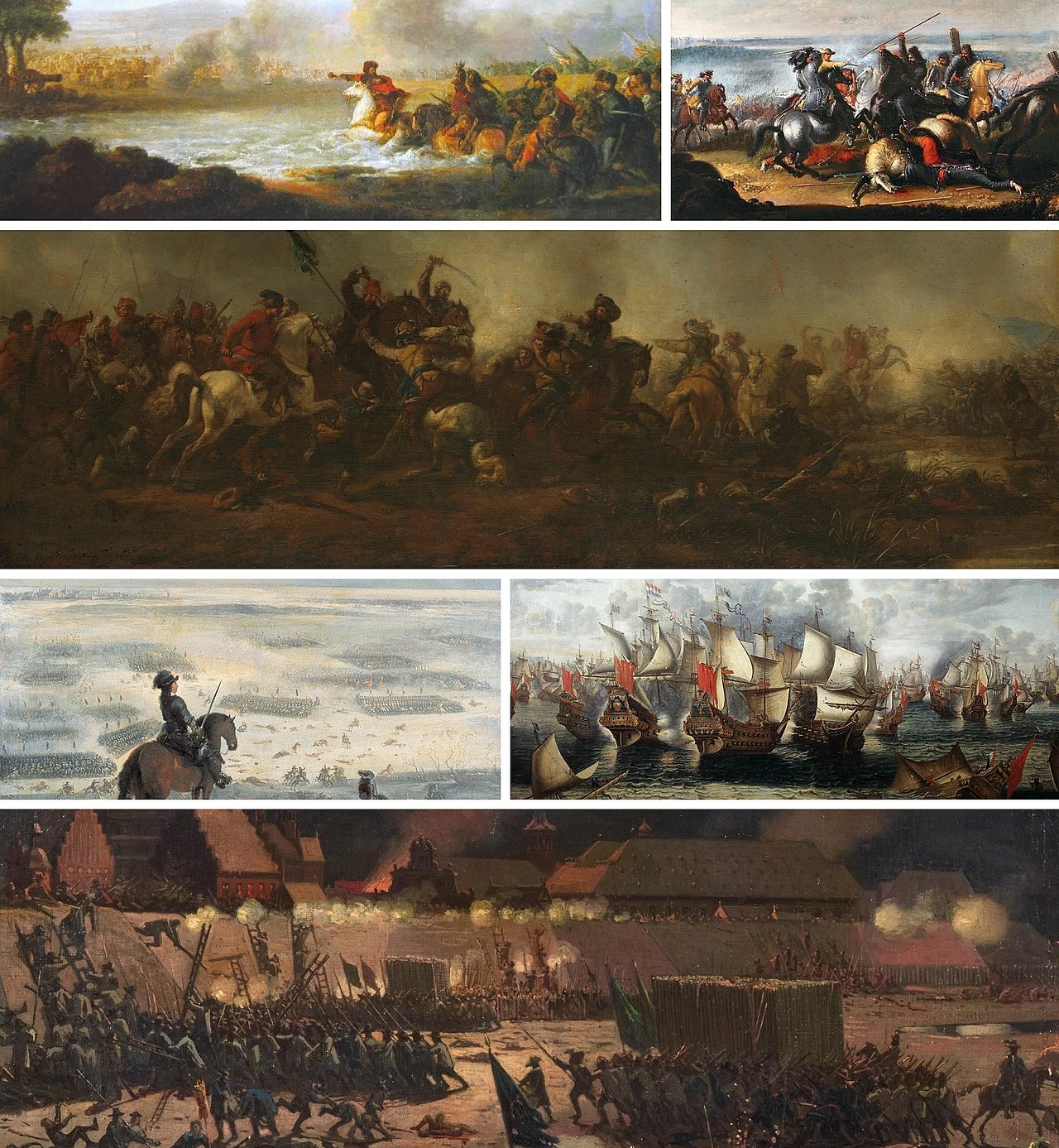
Second Northern War: The war began.
Finland

War
4 min read
Updated By: History Editorial Network (HEN)
Published:
In 1655, the Second Northern War erupted, marking a significant escalation of tensions in the region. The war was primarily fueled by power struggles and territorial ambitions among the major powers of the time, such as Sweden, Poland-Lithuania, and Russia. The conflict quickly spread across Northern Europe, involving various other states and territories.
The war had a profound impact on Finland, which was then a part of the Kingdom of Sweden. Finnish territory became a battleground for the warring parties, leading to widespread devastation and suffering among the local population. The conflict disrupted trade, agriculture, and daily life, plunging the region into chaos and uncertainty.
As the war progressed, Finland experienced military occupations, sieges, and battles, further destabilizing the already vulnerable region. The shifting allegiances and constant warfare created a sense of insecurity and fear among the Finnish people, who bore the brunt of the conflict's consequences.
The Second Northern War reshaped the political and territorial landscape of Northern Europe, leading to significant changes in power dynamics and borders. The war ultimately concluded with the Treaty of Oliva in 1660, which redefined the spheres of influence and territorial possessions of the warring parties.
The legacy of the Second Northern War continued to reverberate in Finland and the wider region for years to come, shaping diplomatic relations, alliances, and conflicts in the subsequent centuries. The war left a lasting imprint on the collective memory of the Finnish people, serving as a reminder of the devastating impact of political ambitions and military conflicts on innocent civilians.
#SecondNorthernWar #FinlandHistory #WarImpact #TreatyofOliva
Primary Reference
Northern War of 1655–1660 - Wikipedia
Explore the Life Moments of
 AI Twin