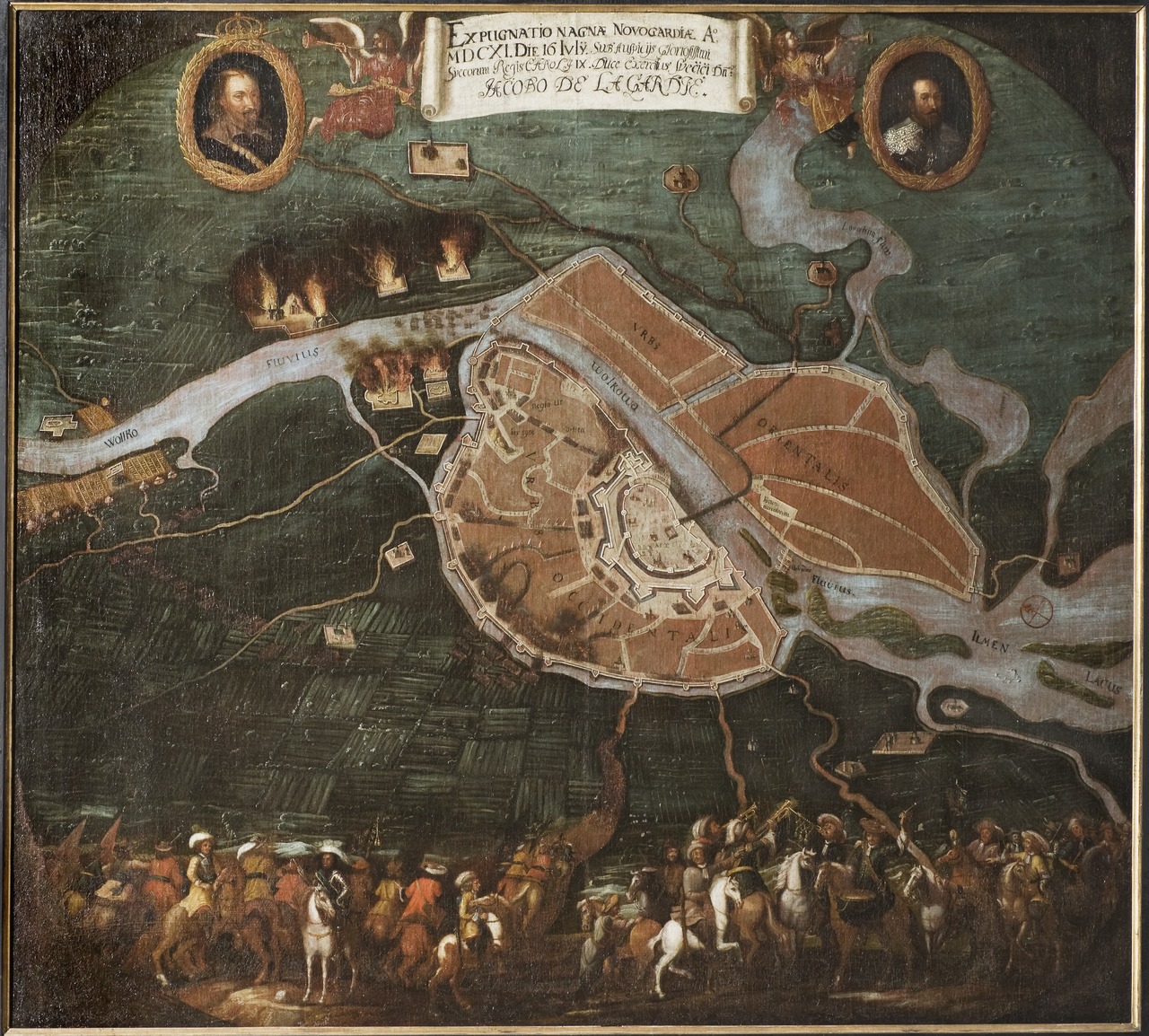
Ingrian War: The war began.
Finland

10 min read
Updated By: History Editorial Network (HEN)
Published:
In 1610, the Ingrian War, a lesser-known but significant conflict, began between the Kingdom of Sweden and the Tsardom of Russia. This war, primarily fought over the control of the Ingria region, was an extension of the larger struggle for dominance in the Baltic region. The conflict would play a crucial role in shaping the power dynamics of Northern Europe.
Background and Causes
The seeds of the Ingrian War were sown in the complex political and military landscape of the early 17th century. The Tsardom of Russia was in turmoil, grappling with internal strife known as the Time of Troubles—a period of political crisis, famine, and succession disputes following the death of Tsar Ivan the Terrible. This internal chaos presented an opportune moment for Sweden to assert its influence and expand its territories.
Sweden, under King Charles IX, was seeking to consolidate its power and expand its influence in the Baltic Sea region. The Ingria region, situated south of the Gulf of Finland, was of strategic importance due to its location between Sweden and Russia. Control over Ingria would not only enhance Sweden's security but also provide a buffer zone against Russian advances.
The Start of the War
The Ingrian War officially began in 1610 when Swedish forces, taking advantage of Russia's internal disarray, launched an invasion into Russian-held territories. The war's initial phase saw Swedish victories, as they managed to capture key fortresses and towns, leveraging their superior military organization and the fragmented state of Russian defenses.
Key Figures and Battles
King Charles IX of Sweden was a central figure in the early stages of the war, although he passed away in 1611, leaving the throne to his son, Gustavus Adolphus. Gustavus Adolphus, who would later be known as one of the greatest military leaders of his time, continued the campaign with vigor. His leadership and military reforms significantly strengthened the Swedish army, contributing to their successes during the war.
One of the notable battles was the Siege of Novgorod in 1611, where Swedish forces managed to capture the key Russian city, further destabilizing the Russian position. The fall of Novgorod was a significant blow to Russia, as it was one of their major strongholds in the region.
Diplomatic Maneuvers
While the military campaign continued, diplomatic efforts were also underway. Sweden sought to solidify its gains and push for a favorable peace settlement. The Russian side, meanwhile, was trying to stabilize internally and gather the strength to resist Swedish advances. The war also saw the involvement of other regional powers, such as Poland, which had its interests in the ongoing conflicts in the region.
The Treaty of Stolbovo
The Ingrian War concluded in 1617 with the signing of the Treaty of Stolbovo. The treaty was a significant diplomatic victory for Sweden. Under its terms, Russia ceded the territories of Ingria and Kexholm to Sweden, effectively giving Sweden control over the southern shore of the Gulf of Finland and a stronger strategic position in the Baltic region. This treaty significantly curtailed Russian access to the Baltic Sea, limiting its maritime ambitions and securing Sweden's dominance in the region.
Impact and Legacy
The Ingrian War and the subsequent Treaty of Stolbovo had far-reaching implications for the balance of power in Northern Europe. For Sweden, the war marked a period of territorial expansion and increased influence, setting the stage for its rise as a major European power under Gustavus Adolphus. The territorial gains in Ingria provided Sweden with a crucial buffer against future Russian aggression and enhanced its strategic position in the Baltic.
For Russia, the loss of Ingria was a significant setback, contributing to its continued isolation from the Baltic Sea. However, it also spurred internal reforms and eventually led to efforts to regain access to the Baltic, culminating in Peter the Great's campaigns in the early 18th century.
Conclusion
The Ingrian War of 1610-1617 was a critical conflict that reshaped the political landscape of Northern Europe. It underscored the strategic importance of the Baltic region and highlighted the shifting power dynamics between Sweden and Russia. The war's outcome strengthened Sweden's position as a dominant Baltic power while marking a period of setback and eventual transformation for Russia.
#MomentsOfLife #MoofLife_Moment #MoofLife #IngrianWar #SwedishHistory #RussianHistory #BalticWars #GustavusAdolphus #TreatyOfStolbovo
Primary Reference
Ingria: The Broken Landbridge between Estonia and Finland
Explore the Life Moments of
 AI Twin