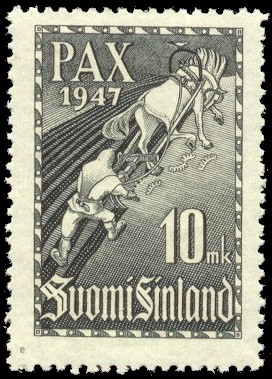
Finland Signs Paris Peace Treaty
Finland

Global Trade
4 min read
Updated By: History Editorial Network (HEN)
Published:
In February 1947, Finland signed the Paris Peace Treaty, bringing a formal end to its involvement in World War II.
During the war, Finland fought against the Soviet Union in the Winter War and the Continuation War. Despite being allied with Nazi Germany, Finland managed to maintain its independence and sovereignty. However, after the defeat of Germany in 1945, Finland found itself in a difficult position as the Soviet Union sought reparations and territorial concessions.
The signing of the Paris Peace Treaty marked the conclusion of negotiations between Finland and the Allied Powers, including the United States, the United Kingdom, and the Soviet Union. As part of the treaty, Finland agreed to pay reparations to the Soviet Union and cede territory, including parts of Karelia and the Porkkala peninsula.
The treaty also imposed restrictions on Finland's military capabilities and established mechanisms for ongoing monitoring of its compliance. Despite the harsh terms of the treaty, Finland was able to maintain its independence and gradually rebuild its economy in the post-war years.
The signing of the Paris Peace Treaty had a lasting impact on Finland's foreign policy and security posture. It marked a shift towards a policy of neutrality and non-alignment, as Finland sought to balance its relationship with the Soviet Union and the Western powers.
Overall, the signing of the Paris Peace Treaty represented a crucial moment in Finland's history, signaling the end of a tumultuous period marked by war and occupation. It laid the foundation for Finland's post-war reconstruction and its emergence as a prosperous and stable democracy in the aftermath of World War II.
#Finland #ParisPeaceTreaty #WorldWarII #SovietUnion #Neutrality
Primary Reference
Paris Peace Treaties | Terms, Summary, & Conference | Britannica

Explore the Life Moments of
 AI Twin