Women's Rights Movement Origins at Seneca Falls
Women's Rights
Social Movements
4 min read
Updated By: History Editorial Network (HEN)
Published:
Updated:
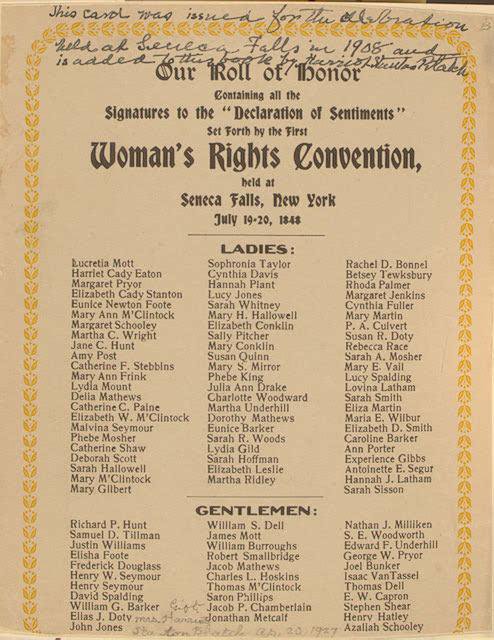
The origins of the Women's Rights Movement can be traced back to the Seneca Falls Convention, which was organized by Lucretia Mott and Elizabeth Cady Stanton. This convention marked a pivotal moment in the fight for women's rights, as it was one of the first gatherings specifically aimed at addressing the social, civil, and religious rights of women. The backdrop of this event was shaped by the experiences of Mott and Stanton, who had previously encountered gender discrimination while attending the World's Anti-Slavery Convention. Their exclusion from the proceedings due to their gender highlighted the broader societal issues women faced, prompting them to take action. At the Seneca Falls Convention, the attendees drafted a Declaration of Sentiments, which outlined the grievances and demands of women, paralleling the Declaration of Independence. This document called for equal rights, including the right to vote, and served as a foundational text for the women's rights movement.
The impact of the Seneca Falls Convention was profound, as it galvanized a movement that would grow in strength and visibility over the following decades. The convention attracted attention and sparked discussions about women's roles in society, leading to increased activism and the formation of various women's rights organizations. The Declaration of Sentiments became a rallying point for future suffragists and activists, influencing subsequent conventions and campaigns. Statistics from later periods indicate that the movement gained traction, with a significant increase in women's participation in public life and advocacy for legal reforms. The Seneca Falls Convention is often regarded as the starting point of the organized women's rights movement in the United States, laying the groundwork for future advancements in gender equality.
#mooflife
#MomentOfLife
#Women'sRightsMovement
#SenecaFallsConvention
#LucretiaMott
#ElizabethCadyStanton
#GenderEquality

Explore the Life Moments of
 AI Twin