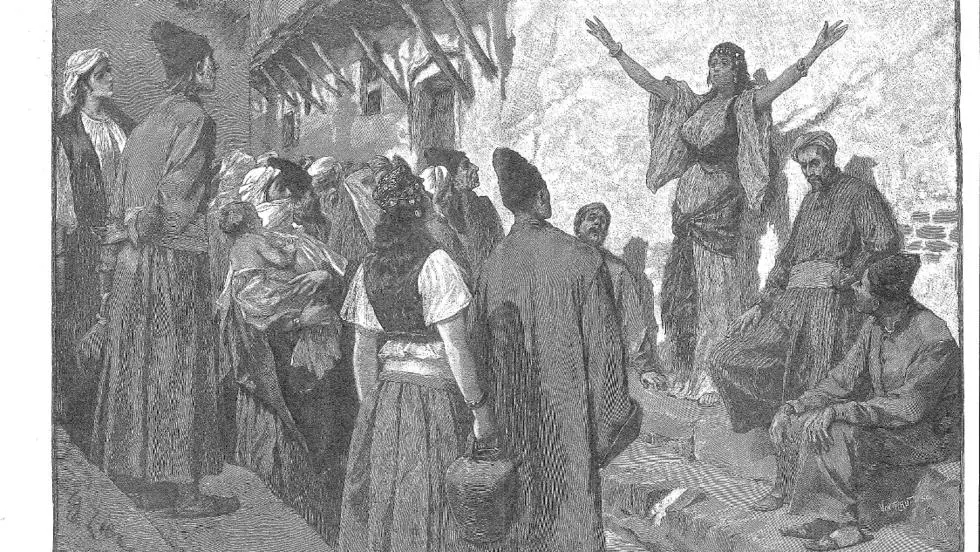
Execution of Táhirih and Her Last Words
Feminism
19th Century History
Social Movements
5 min read
Updated By: History Editorial Network (HEN)
Published:
Updated:
Táhirih, born Fatimah Baraghani in 1817 in Qazvin, Persia, was a distinguished scholar, poet, and one of the first female theologians of her era. Raised in a prominent Shi’a Muslim family, she was granted an education in religious sciences—highly unusual for women at the time—and quickly gained a reputation for her intellect and command of theology and literature. Her conversion to the Bábí faith, which advocated for spiritual renewal and social reform, marked a radical departure from conventional religious orthodoxy and drew severe condemnation from both her family and religious authorities.
Táhirih’s most iconic and revolutionary act took place at the Conference of Badasht in 1848. There, in a dramatic and deliberate moment, she removed her veil in front of an assembly of male followers—a deeply symbolic and defiant act against entrenched patriarchal norms. However, this unveiling was not merely visual; Táhirih accompanied it with a powerful speech, proclaiming the abrogation of Islamic law and the dawn of a new religious dispensation. She framed this transformation as not only spiritual but also deeply tied to the liberation of women, demanding a radical rethinking of gender roles, justice, and religious authority. Her words stunned the audience; some reportedly fled the room in shock. Yet others were inspired, recognizing her as a fearless visionary.
Táhirih’s radical stance and growing influence alarmed Persian authorities. She was placed under house arrest in Tehran for four years, during which she continued to write and correspond, despite her confinement. In 1852, amid a wave of political repression following an assassination attempt on the Shah, Táhirih was secretly executed—strangled with a silk scarf and buried without ceremony. Her final words reportedly declared: “You can kill me as soon as you like, but you cannot stop the emancipation of women.”
Her legacy lives on not only through her writings—rich with poetic and mystical beauty—but also through her uncompromising courage. Táhirih is honored today as a pioneer of women’s rights in the Islamic world, a martyr of religious reform, and a symbol of intellectual and spiritual defiance. She remains one of the few 19th-century Muslim women whose name and voice have endured globally.
#mooflife
#MomentOfLife
#FeministMovement
#Women'sRights
#LaVoixDesFemmes
#EugénieNiboyet
#FeminismInFrance

Explore the Life Moments of
 AI Twin