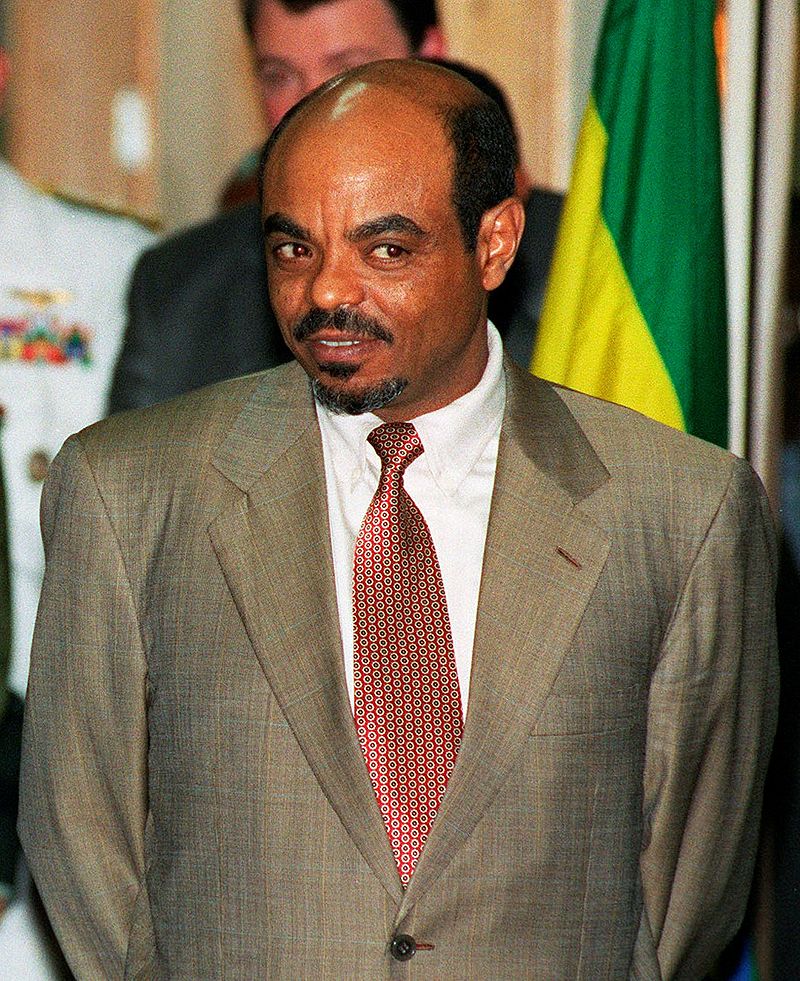
General election outcome: EPRDF secures majority seats in Ethiopian parliament.
Ethiopia
Political
6 min read
Updated By: History Editorial Network (HEN)
Published:
On May 14, 2000, Ethiopia held a pivotal general election that saw the Ethiopian People's Revolutionary Democratic Front (EPRDF) securing a majority of the seats in the Ethiopian parliament. This election marked a significant moment in the nation’s political landscape, coming after a period of internal conflict and efforts at democratization following the fall of the Derg regime in 1991.
The EPRDF, a coalition of several political parties led by the Tigrayan People's Liberation Front (TPLF), had been the dominant force in Ethiopian politics since it overthrew the Derg, a Marxist-Leninist junta, in 1991. Under the leadership of Prime Minister Meles Zenawi, the EPRDF had promoted a federal system purportedly aimed at giving various ethnic groups greater autonomy. However, the party was often criticized for its authoritarian grip on power, including its control over the media and suppression of dissent.
The 2000 elections were conducted amidst this backdrop of controversy and skepticism, both domestically and internationally. International observers and opposition groups raised concerns about the fairness and transparency of the electoral process. Reports of intimidation, harassment of opposition candidates, and biased state-run media coverage marred the election environment. Despite these issues, the elections proceeded, and the EPRDF emerged victorious, solidifying its control over Ethiopian politics.
The results confirmed the EPRDF's dominance, with the coalition winning a substantial majority of the parliamentary seats. This victory enabled them to continue their policies without substantial opposition within the parliament. The election results also underscored the fragmented nature of the Ethiopian opposition, which was unable to form a cohesive challenge to the ruling coalition.
The 2000 general election was crucial as it demonstrated the complexities of Ethiopia’s ethnic federalism and the challenges of transitioning from a centralized, authoritarian rule to a more democratic system. While the EPRDF claimed that the elections were a step forward in democratizing the country, the lack of competitive political space and the allegations of electoral malpractices highlighted the difficulties in achieving genuine democratic governance in Ethiopia.
The aftermath of the election saw continued unrest and periodic conflicts, reflecting the deep-seated ethnic and political tensions in the country. These issues remain pertinent as Ethiopia strives for stability and democratic inclusiveness in its political processes.
This historical moment is a key point of reflection for understanding Ethiopia's political trajectory and the enduring challenges of governance and democratization in a complex, multi-ethnic context.
#EPRDFVictory #EthiopianElections2000 #MelesZenawi #EthiopianPolitics #DemocratizationInEthiopia #MomentsOfLife #MoofLife_Moment #MoofLife
Primary Reference
2000 Ethiopian general election - Wikipedia

Explore the Life Moments of
 AI Twin