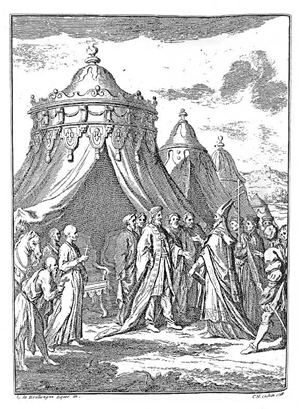
Emperor Susenyos converts to Catholicism and enforces it on his people.
Ethiopia
Religious Conflict
4 min read
Updated By: History Editorial Network (HEN)
Published:
In 1607, the reign of Emperor Susenyos marked a significant shift in Ethiopian history when he converted to Catholicism. His decision to embrace this foreign faith sparked controversy and resistance among his predominantly Orthodox Christian subjects. Susenyos, influenced by Portuguese missionaries, sought to impose Catholicism on his people, leading to unrest and divisions within the empire.
The emperor's conversion and his attempts to enforce the new religion caused a series of uprisings and rebellions across the country. The introduction of Catholic practices and the suppression of traditional Orthodox beliefs added fuel to the growing discontent among the population. This period of religious turmoil brought about social and political instability, further weakening the unity of the empire.
Despite his efforts, Emperor Susenyos faced fierce opposition from the Ethiopian Orthodox Church, nobles, and the general population, leading to internal strife and conflict throughout his reign. The imposition of Catholicism as the state religion eventually failed, as his subjects refused to abandon their long-standing Orthodox Christian traditions.
The reign of Emperor Susenyos, marked by his conversion to Catholicism and subsequent attempts to enforce the faith, remains a contentious chapter in Ethiopian history. It represents a critical moment of religious tension, political upheaval, and cultural clash in the empire's narrative.
#EmperorSusenyos #EthiopianHistory #ReligiousConversion #CatholicismImposition
Primary Reference
Susenyos I - Wikipedia

Explore the Life Moments of
 AI Twin