Rise of the Pipil Kingdom in the west
El Salvador
Cultural
6 min read
Updated By: History Editorial Network (HEN)
Published:
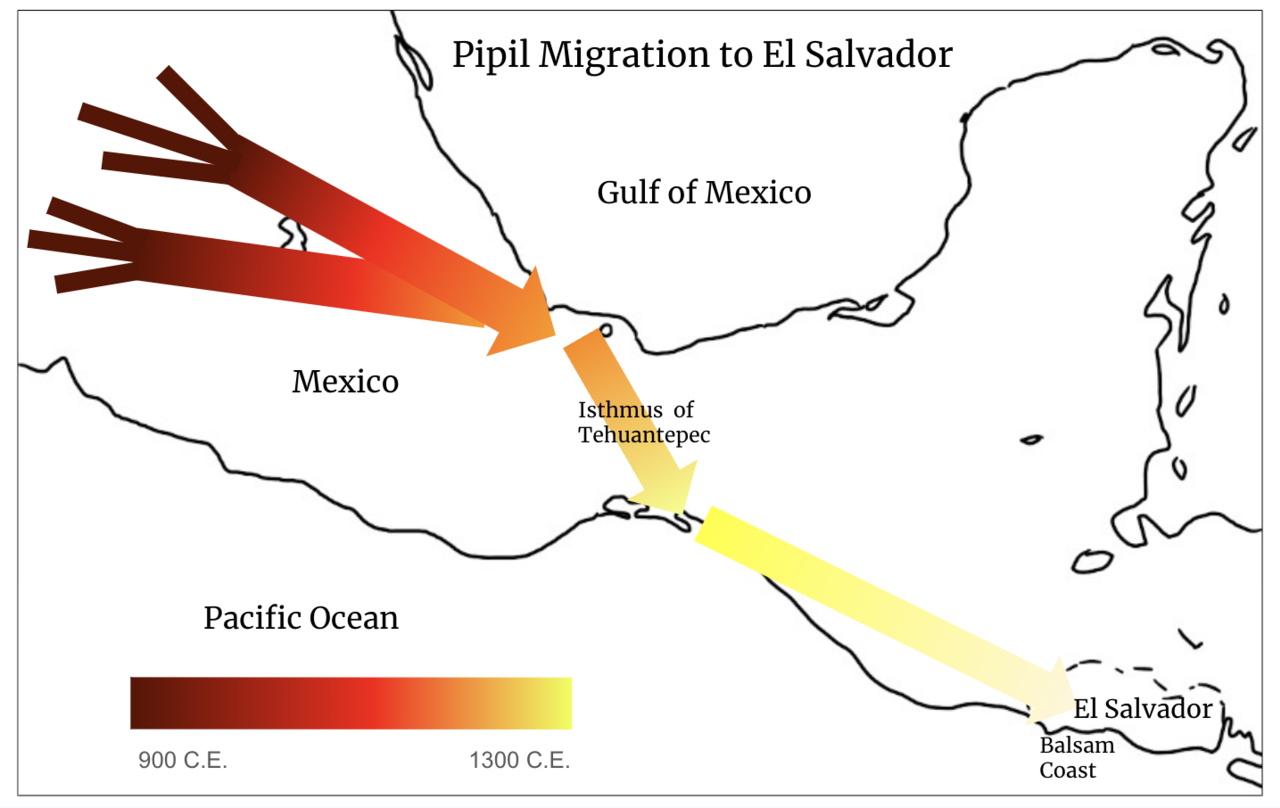
In the early 14th century, the Pipil people in western El Salvador established their kingdom. This process marked a pivotal development in Mesoamerican history. Originating from the Nahua culture, the Pipil were part of the greater Uto-Aztecan language family, migrating from central Mexico. They brought with them agricultural knowledge, advanced social structures, and religious practices.
Establishing their dominance in western El Salvador, the Pipil reorganized existing communities into a cohesive political entity. This restructuring included the implementation of a centralized governance system, led by a ruler and a council of nobles. This governance aimed at enhancing administrative efficiency and strengthening territorial control.
The kingdom encompassed several significant settlements. Two of the most notable were Cuzcatlan, which served as the political and cultural hub, and Tacuba, a crucial trade center. The Pipil kingdom engaged in extensive trade networks, fostering economic growth and cultural exchange. They traded goods such as cacao, obsidian, and textiles with neighboring regions, including the Maya and the Lenca.
Socially, the Pipil introduced hierarchical structures, dividing their society into classes that included nobles, commoners, and slaves. They practiced intensive agriculture, cultivating crops such as maize and beans, and developed irrigation systems to support increased agricultural productivity. Religious practices played a central role in Pipil society, involving complex ceremonies and rituals dedicated to deities of their pantheon.
The formation of the Pipil kingdom also led to cultural synthesis. As they interacted with neighboring cultures, the Pipil incorporated elements of Maya architecture and Lenca pottery techniques. This blend of cultural traits enriched their societal development and artistic expressions.
In military terms, the kingdom maintained a formidable warrior class, vital for defending its territories and expanding influence. Through strategic alliances and conquests, the Pipil kingdom asserted its presence, contributing to the broader political landscape of pre-Columbian Mesoamerica.
The establishment of the kingdom had a lasting impact on the region. It solidified the Pipil's influence and laid the groundwork for subsequent historical events. Their cultural and social systems set precedents that would endure across centuries.
#ElSalvadorHistory #PipilKingdom #CulturalSynthesis #MesoamericanTrade #AncientGovernance #MoofLife

Explore the Life Moments of
 AI Twin