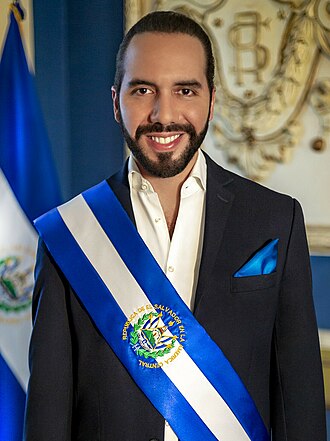
President Nayib Bukele's landslide win in Salvadoran election signals strong support for his policies.
El Salvador
Political
Global Trade
4 min read
Updated By: History Editorial Network (HEN)
Published:
Nayib Bukele, the sitting president of El Salvador, secured a resounding victory in the Salvadoran general election with more than 80% of the vote. This outcome reflected widespread support for his administration. Bukele, who first assumed office in 2019, has been a polarizing figure, achieving notable economic reforms and launching an aggressive crackdown on gang violence. His administration has been characterized by a focus on modernization and digital currency experimentation, with El Salvador becoming the first country to adopt Bitcoin as legal tender.
The election results underscore the significant backing from the Salvadoran populace, suggesting approval of Bukele's policies and governance style. However, his tenure has also faced criticism from international bodies and human rights organizations over allegations of authoritarianism, suppression of political dissent, and concerns about press freedom.
Statistically speaking, turnout in this election was higher than in previous years, indicating a mobilized and engaged electorate. Bukele's Nuevas Ideas party continues to dominate the legislative assembly, giving him the leverage to implement his policy agenda with relatively little opposition.
The election's implications for El Salvador's political landscape are considerable. With a strong mandate, Bukele has the capacity to push forward with his ambitious plans for economic development and security measures. Nonetheless, the international community will be closely monitoring his administration's adherence to democratic norms and human rights standards.
#NayibBukele #ElSalvadorElections #Governance #DigitalCurrency #MoofLife
Primary Reference
El Salvador's President Bukele wins re-election by huge margin

Explore the Life Moments of
 AI Twin