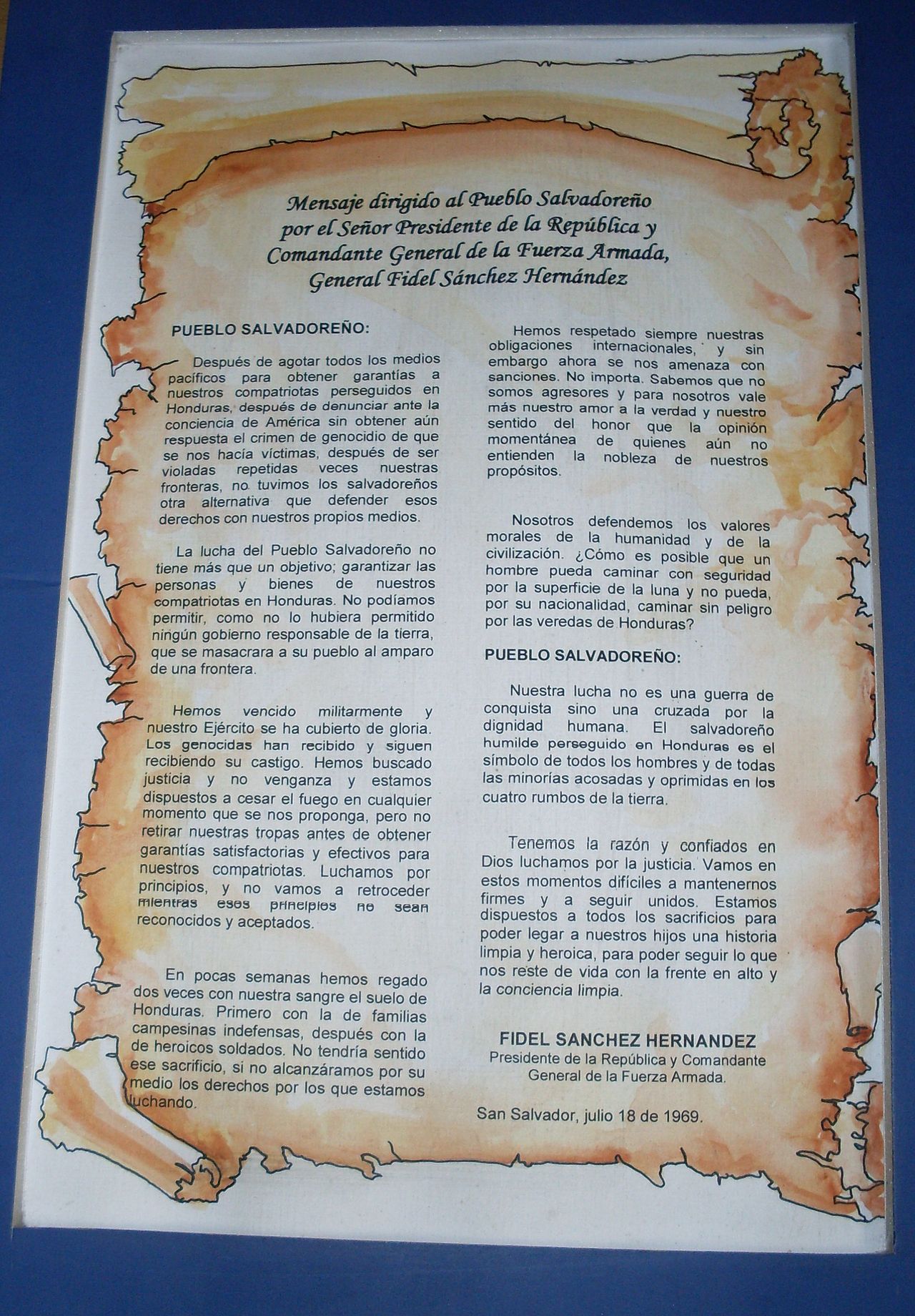
The Football War: Conflict between neighboring countries over a soccer match escalates into violence.
El Salvador

Political
4 min read
Updated By: History Editorial Network (HEN)
Published:
The 'Football War' between El Salvador and Honduras erupted following escalating tensions rooted in economic and political issues. Land reforms in Honduras led to the expulsion of Salvadoran immigrants, heightening friction between the neighboring nations. The strained relationship found a focal point during a series of World Cup qualifiers, where the intense rivalry between both nations turned violent.
The breaking point occurred following the decisive third match, held in Mexico City. During this match, passions ran high, and emotions spilled over, both on and off the field. The game became a symbol of the broader nationalistic and socio-economic conflicts, turning into a spark that ignited military conflict between the two countries.
The hostilities lasted for one hundred hours, involving air raids, infantry fighting, and significant mobilizations of military forces. Casualties were substantial, with estimates of around 2,000 deaths and thousands more wounded. Damage to infrastructure and economic setback further strained the already fraught relations.
On social and political fronts, the conflict led to increased nationalism in both countries. There was also international involvement, with the Organization of American States (OAS) eventually brokering a ceasefire, highlighting the geopolitical implications of the conflict.
Post-war reconciliation efforts were complicated and drawn out, reflecting the deep-rooted issues that had sparked the conflict. The conflict is a poignant reminder of how sports can sometimes transcend beyond the playing field into realms of political and social disputes.
Relevant hashtags: #MoofLife #ElSalvador #FootballWar #Honduras #Conflict #History #OAS #MilitaryHistory
Explore the Life Moments of
 AI Twin