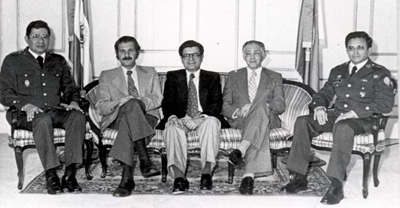
Military coup leads to junta establishment
El Salvador
PoliticalEvents
6 min read
Updated By: History Editorial Network (HEN)
Published:
El Salvador underwent a dramatic shift when a military coup took place. The upheaval was rooted in longstanding social and economic inequalities that plagued the country. Years of civil unrest, growing discontent among civilians, and the influence of Cold War geopolitics set the stage for the coup. Discontent stemmed from a concentration of land ownership and resources in the hands of a wealthy elite, leaving a significant portion of the population in poverty.
The military, seeing the instability and internal strife, decided to intervene. The coup led to the establishment of a junta, which replaced the existing government. The junta was a group formed by high-ranking military officers who promised reforms and pledged to address the country's deep-rooted issues. Initially, their promises included land reforms and broader social justice, seeking to mitigate the conditions that had fueled dissent.
The impact of the junta's ascension to power was immediate and profound. Political parties were dissolved, and civil liberties were significantly restricted. The period that followed saw an escalation in violence as both the junta and opposition groups, including leftist guerrilla factions, engaged in armed conflict. Repression increased, with numerous reports of human rights abuses such as torture, disappearances, and extrajudicial killings becoming commonplace.
Economically, the junta's policies had mixed results. Some efforts at land redistribution were implemented, but they often fell short of meeting the needs of the impoverished majority. Moreover, the inconsistent and often brutal enforcement of these policies contributed to further social turmoil rather than alleviating it.
Internationally, the coup and subsequent rule of the junta drew significant attention. Various countries reacted differently, with some backing the junta in hopes of containing communist influences, while others condemned the human rights violations associated with the regime. The situation in El Salvador became a point of contention in the broader Cold War context, shaping international aid and diplomatic relations.
The military coup thus marked a pivotal moment in El Salvador's history, influencing its socio-political landscape for years to come and setting the stage for a prolonged civil conflict. This period would see the struggle between authoritarian control and demands for democratic governance continue with great intensity.
#MilitaryCoup #ElSalvador #CivilConflict #HumanRights #Junta #LandReform #ColdWarInfluence #HistoricalEvents #MoofLife
Explore the Life Moments of
 AI Twin