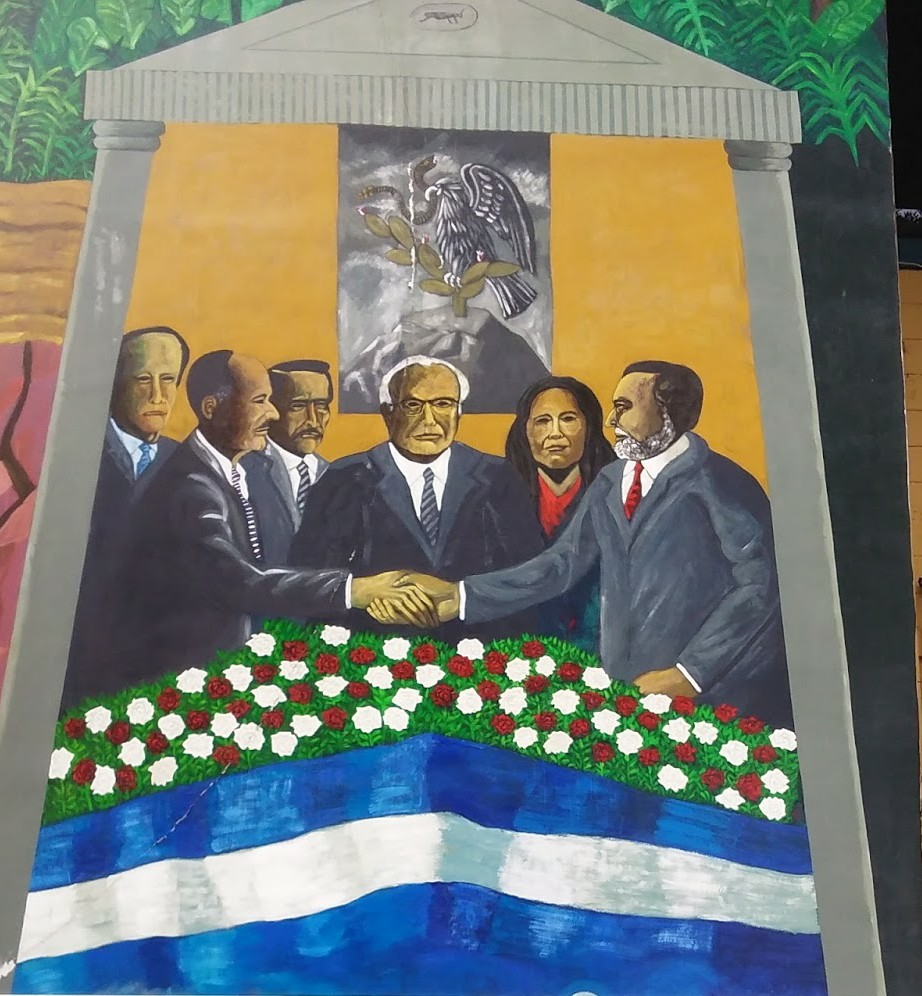
End of Salvadoran Civil War: Signing of Peace Accords and Rebel Demobilization.
El Salvador

Political
Global Trade
6 min read
Updated By: History Editorial Network (HEN)
Published:
The Chapultepec Peace Accords marked the culmination of the Salvadoran Civil War, a conflict that spanned more than a decade, resulting in approximately 75,000 deaths and significant displacement of the population. The war involved the government of El Salvador and the Farabundo Martí National Liberation Front (FMLN), a coalition of left-wing guerrilla groups. This war was characterized by widespread human rights violations, drawing international attention and condemnation.
Leading up to this accord, extensive negotiations brokered by the United Nations facilitated dialogue between the warring parties. The negotiations were a response to the immense pressure from civil society groups, international organizations, and countries worldwide, all seeking an end to the hostilities that had devastated the nation.
The signing took place in Mexico City, at the historic Chapultepec Castle, symbolizing a new chapter for El Salvador. The peace agreement included provisions for a ceasefire, the demobilization of the FMLN, the reduction of the armed forces, and constitutional reforms aimed at ensuring democratic governance and human rights. The accords mandated the establishment of the Commission on the Truth for El Salvador, tasked with investigating human rights abuses committed during the conflict.
The demobilization process involved the disbanding of FMLN combat units and the reintegration of former fighters into civilian life. This process was crucial for stabilizing the country and fostering national reconciliation. The agreement also led to the restructuring of the Salvadoran armed forces, reducing their size and reorienting their focus towards a peacetime role, including disaster response and infrastructure development.
Economically, the country saw gradual improvements post-accord, with international aid and investments flowing in to support reconstruction and development efforts. Politically, the accords paved the way for the FMLN to transition into a legitimate political party, enabling them to participate in democratic elections. This transformation was a significant step towards establishing a multiparty democracy in El Salvador.
The Chapultepec Peace Accords are regarded as a cornerstone in the history of El Salvador, demonstrating the potential of negotiated settlements in resolving protracted conflicts. The success of this peace process has influenced other regions experiencing similar turmoil, highlighting the importance of international mediation and comprehensive agreements in achieving lasting peace.
#PeaceAccords #EndOfCivilWar #ElSalvadorHistory #Demobilization #ConflictResolution #MoofLife
Explore the Life Moments of
 AI Twin