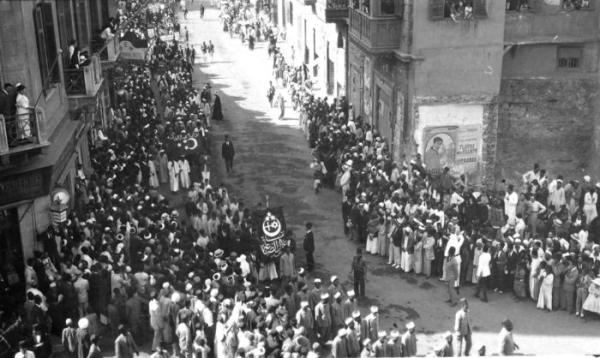
Unilateral Declaration of Egyptian Independence
Egypt

Political
8 min read
Updated By: History Editorial Network (HEN)
Published:
The Unilateral Declaration of Egyptian Independence, issued on February 28, 1922, marked a pivotal moment in Egypt's modern history. This declaration ended the British protectorate established in 1914 and recognized Egypt as an independent sovereign state. However, the independence was partial and retained significant British control over key aspects of Egyptian governance.
Background
The British Protectorate
The British occupation of Egypt began in 1882, and by 1914, Egypt was declared a British protectorate, detaching it from the Ottoman Empire. This move was partly influenced by the strategic importance of the Suez Canal. During World War I, Egypt was a crucial base for British operations in the Middle East, leading to increasing discontent among Egyptians over British control.
Egyptian Nationalist Movement
The end of World War I saw a surge in nationalist sentiments. The Wafd Party, led by Saad Zaghloul, emerged as the primary force advocating for Egyptian independence. In 1919, widespread protests and civil disobedience, known as the Egyptian Revolution of 1919, demanded an end to British rule and self-determination. The British response was a combination of repression and negotiation, leading to the eventual decision to grant limited independence.
The Declaration
On February 28, 1922, the British government issued a unilateral declaration, which recognized Egypt as an independent sovereign state. However, this independence came with significant caveats. The declaration allowed Britain to retain control over:
The Security of British Imperial Communications: Ensuring the protection of the Suez Canal and maintaining military bases in Egypt.
The Defense of Egypt: Britain reserved the right to defend Egypt against foreign aggression.
The Protection of Foreign Interests and Minorities: Safeguarding the rights and privileges of foreigners and minority communities in Egypt.
Sudan: Britain maintained control over Sudan, which was jointly administered by Britain and Egypt under the condominium agreement of 1899.
Immediate Impact
King Fuad I
Following the declaration, Egypt's Sultan Fuad I assumed the title of King, symbolizing the new status of the country. While the declaration marked the end of the protectorate, it did not establish a fully sovereign and independent state free from British influence.
Continued Nationalist Struggle
The limitations of the declaration were immediately apparent. Nationalists, including the Wafd Party, continued to push for complete independence, leading to ongoing political struggles. The incomplete nature of the independence sowed the seeds for future conflicts between Egyptian nationalists and the British.
Long-term Consequences
Anglo-Egyptian Treaty of 1936
The partial independence granted in 1922 eventually led to further negotiations. The Anglo-Egyptian Treaty of 1936 granted Egypt greater autonomy, though British military presence remained. This treaty was an attempt to stabilize relations and address some of the issues unresolved by the 1922 declaration.
Path to Full Independence
The struggle for full independence continued throughout the 1940s and early 1950s. The rise of the Free Officers Movement, led by figures like Gamal Abdel Nasser, culminated in the Egyptian Revolution of 1952, which overthrew the monarchy. In 1953, Egypt was declared a republic, and in 1956, the British military finally withdrew from the Suez Canal zone, marking the end of British influence in Egypt.
#EgyptianIndependence #BritishProtectorate #EgyptianHistory #MomentsOfLife #MoofLife_Moment #MoofLife
Primary Reference
History of Egypt under the British - Wikipedia

Explore the Life Moments of
 AI Twin