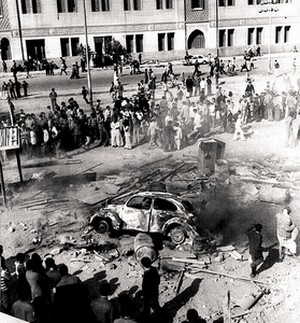
Egypt experienced widespread "bread riots" in major cities
Egypt
9 min read
Updated By: History Editorial Network (HEN)
Published:
In January 1977, Egypt experienced widespread "bread riots" in major cities, a significant event that highlighted the country's economic challenges and the social impact of policy changes. These riots erupted in response to the Egyptian government's decision to end subsidies on basic foodstuffs, a move mandated by an agreement with the World Bank and the International Monetary Fund (IMF) aimed at stabilizing the nation's economy.
Background
Egypt in the 1970s was facing severe economic difficulties. After the 1973 Yom Kippur War, the country's economy was strained by military expenditures and the ongoing state of conflict. Additionally, President Anwar Sadat's "Infitah" (open-door) economic policy aimed to liberalize the economy and attract foreign investment. However, this policy also led to increased inequality and social discontent.
To address these economic woes, Sadat's government sought financial assistance from international organizations like the World Bank and the IMF. These institutions agreed to provide loans but with stringent conditions attached, including reducing the budget deficit by cutting government subsidies on basic goods like bread, rice, and cooking oil.
The Riots
The announcement of subsidy cuts came on January 17, 1977. The immediate effect was a sharp increase in the prices of essential food items, sparking widespread anger among the Egyptian populace, especially the urban poor who relied heavily on these subsidies for their daily sustenance.
Protests began spontaneously in various cities, including Cairo, Alexandria, and Asyut. Demonstrators took to the streets, chanting slogans against the government and vandalizing property. The scale and intensity of the riots quickly grew, with thousands of people participating in acts of civil disobedience and clashing with security forces. The unrest led to extensive damage to public infrastructure, including buses, government buildings, and shops.
Government Response
The scale of the riots took the government by surprise. President Sadat initially responded by deploying the military to restore order. However, the use of force only escalated tensions, resulting in numerous casualties. Faced with mounting violence and the potential for broader social unrest, Sadat reversed the subsidy cuts on January 19, just two days after they were announced.
This rapid policy reversal highlighted the government's sensitivity to public sentiment and the limitations of its economic reform agenda when confronted with popular opposition. It also underscored the precarious balance that Sadat needed to maintain between implementing necessary economic reforms and ensuring social stability.
Aftermath and Impact
The "bread riots" of January 1977 had several significant consequences:
Economic Policy Adjustments: The Egyptian government realized the necessity of a more gradual approach to economic reforms, especially those affecting the poor. Future subsidy reductions were implemented more cautiously to avoid similar backlash.
Political Repercussions: The riots exposed the depth of popular discontent with the government's economic policies and highlighted the potential for social unrest. This awareness influenced subsequent policy decisions and contributed to the broader political dynamics of Sadat's presidency.
Social Awareness: The riots were a stark reminder of the deep-seated economic inequalities and the critical dependence of a large segment of the population on government support. They underscored the need for policies that balanced economic liberalization with social welfare.
International Relations: The events highlighted the complexities of implementing IMF and World Bank policies in developing countries. These institutions became more aware of the social and political dimensions of their economic prescriptions.
#MomentsOfLife #MoofLife_Moment #MoofLife #EgyptianHistory #BreadRiots #EconomicReform #SocialUnrest #1977 #AnwarSadat #IMF #WorldBank #MiddleEasternHistory

Explore the Life Moments of
 AI Twin