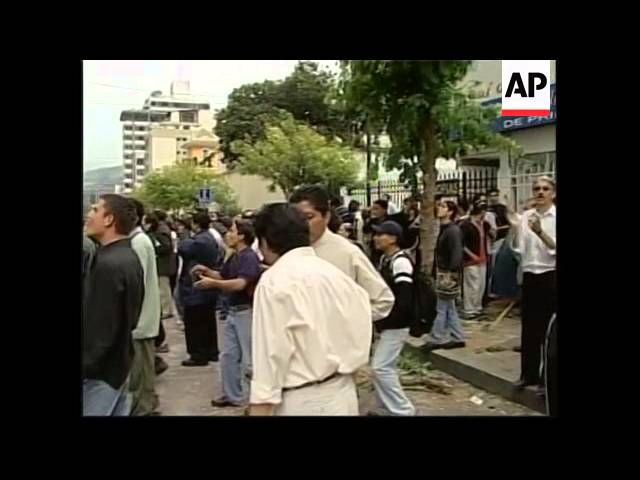
Removal of President Lucio Gutiérrez
Ecuador
Politics
Government
Leadership
4 min read
Updated By: History Editorial Network (HEN)
Published:
Updated:
The removal of President Lucio Gutiérrez from office by Congress marked a pivotal moment in Ecuador's political landscape. Gutiérrez, who had been in power for a brief period, faced significant challenges that undermined his political capital. His administration was characterized by increasing discontent among various sectors, including indigenous groups and labor unions, which culminated in widespread protests against his governance. The Congress's decision to oust him reflected a growing frustration with his leadership style and policies, which many perceived as ineffective and unresponsive to the needs of the populace. Following Gutiérrez's removal, Vice President Alfredo Palacio assumed the presidency, signaling a shift in the political dynamics of the country. Palacio's administration aimed to stabilize the situation and restore public confidence in the government, although it faced its own set of challenges in navigating the complex political environment.
The political upheaval set the stage for the subsequent election cycle, where Rafael Correa emerged victorious in the presidential race. Correa's election in 2006 represented a significant shift towards leftist policies in Ecuador, as he promised to address the socio-economic issues that had plagued the nation. His administration, which began in early 2007, sought to implement reforms that would benefit the marginalized sectors of society and reduce inequality. The transition from Gutiérrez to Palacio, and eventually to Correa, illustrates the volatility of Ecuadorian politics and the electorate's demand for change, highlighting the importance of political accountability and responsiveness in governance.
#mooflife
#MomentOfLife
#EcuadorPolitics
#LucioGutiérrez
#AlfredoPalacio
#RafaelCorrea
#PoliticalChange

Explore the Life Moments of
 AI Twin