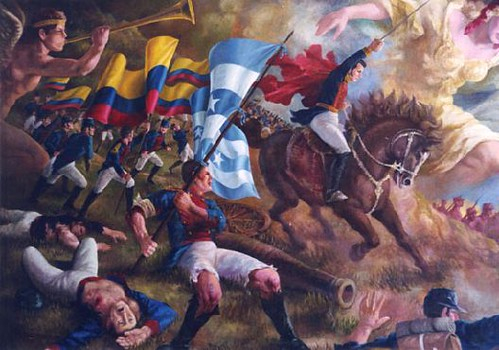
Battle of Pichincha marked a pivotal moment in Ecuador's quest for independence
Ecuador

Independence
Ecuador
3 min read
Updated By: History Editorial Network (HEN)
Published:
Updated:
The Battle of Pichincha marked a pivotal moment in Ecuador's quest for independence from Spanish colonial rule. Led by General Antonio José de Sucre, the patriot forces engaged the Spanish Royalist troops in a decisive confrontation near Quito. This battle was part of a broader campaign for independence that swept across South America, fueled by revolutionary ideals and the leadership of figures such as Simón Bolívar. The victory at Pichincha not only liberated Ecuador from Spanish control but also facilitated its integration into the Republic of Gran Colombia, a political entity that included present-day Colombia, Venezuela, and Panama. This union aimed to consolidate the newly independent territories and promote regional stability and cooperation.
The aftermath of the battle had lasting implications for Ecuador's political landscape. By joining Gran Colombia, Ecuador aligned itself with a larger movement for independence and republican governance in Latin America. However, the union was short-lived, as internal divisions and regional differences led to Ecuador's separation from Gran Colombia in the early 1830s. This transition marked the beginning of Ecuador's journey as an independent nation, navigating its own political and social challenges while establishing its identity in the post-colonial era. The Battle of Pichincha remains a symbol of national pride and a foundational event in Ecuador's history, representing the struggle for sovereignty and self-determination.
#mooflife
#MomentOfLife
#EcuadorIndependence
#BattleOfPichincha
#AntonioJoséDeSucre
#GranColombia
#LatinAmericanHistory

Explore the Life Moments of
 AI Twin