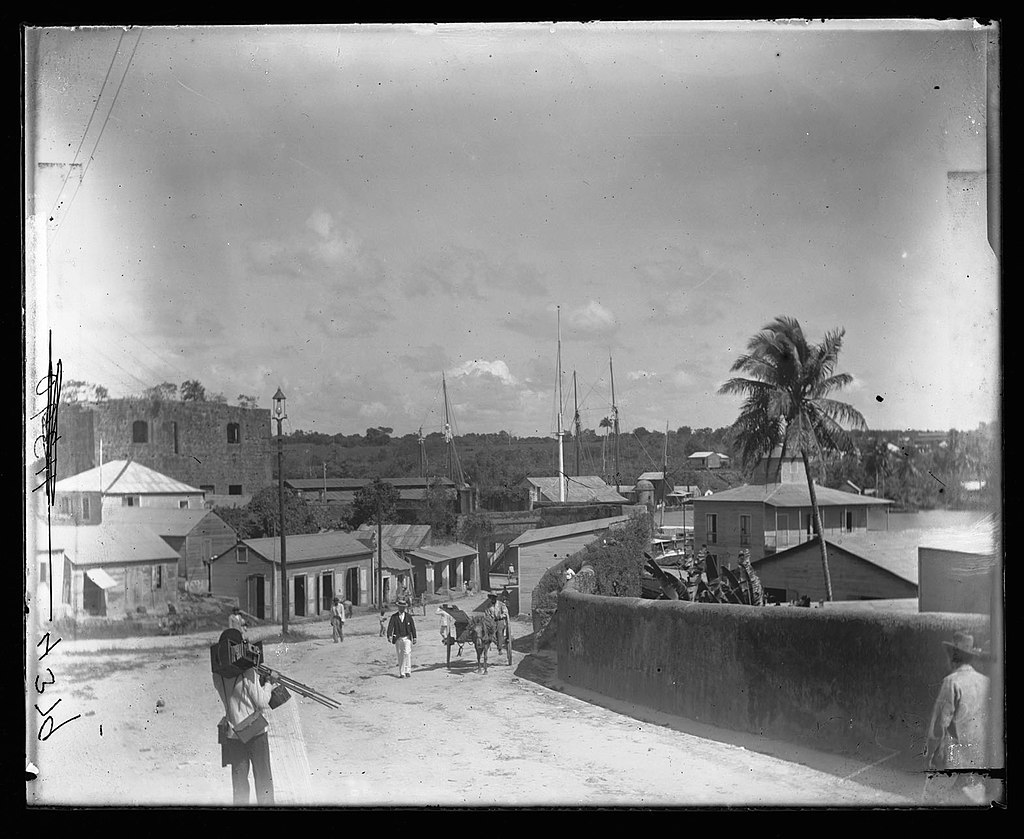
The Founding of Santo Domingo
Dominican Republic
Colonization
4 min read
Updated By: History Editorial Network (HEN)
Published:
In 1498, the founding of Santo Domingo marked the establishment of the first permanent European settlement in the Americas. This pivotal moment was spearheaded by Christopher Columbus during his third voyage to the New World. The settlement was strategically located on the southeastern coast of the island of Hispaniola, present-day Dominican Republic, to serve as a base for further exploration and colonization efforts.
The founding of Santo Domingo had a profound impact on the course of history in the Americas. It paved the way for subsequent Spanish expeditions and the colonization of the Caribbean region. The settlement quickly became a hub for trade, administration, and missionary activities, playing a key role in the Spanish Empire's expansion in the New World.
Santo Domingo's strategic location and thriving economy attracted settlers from across Europe, including conquistadors, merchants, and missionaries. This diverse influx of people contributed to the cultural and ethnic melting pot that would come to characterize the Caribbean region.
The establishment of Santo Domingo also had far-reaching consequences for the indigenous Taino population of Hispaniola. The arrival of the Spanish colonizers brought disease, forced labor, and cultural upheaval, leading to a significant decline in the Taino population and the eventual extinction of their way of life.
The founding of Santo Domingo marked the beginning of European dominance in the Americas and set the stage for centuries of colonization, conflict, and cultural exchange. It remains a pivotal moment in the history of the Dominican Republic and the broader Caribbean region, shaping the socio-political landscape that persists to this day.
#SantoDomingo #EuropeanSettlement #Colonization #ChristopherColumbus #Hispaniola #DominicanRepublic #CulturalExchange
Primary Reference
Santo Domingo - Wikipedia
Explore the Life Moments of
 AI Twin