Senna
5 min read
Updated By: History Editorial Network (HEN)
Published:
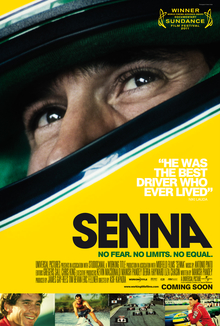
Senna is a 2010 documentary directed by Asif Kapadia that chronicles the extraordinary life and tragic death of Brazilian Formula 1 driver Ayrton Senna. Crafted entirely from archival footage and voice-over interviews—without any modern-day narration or talking-head segments—the film immerses viewers in the rapid rise of Senna from karting prodigy to three-time World Champion. It captures his fierce rivalry with Alain Prost, his perfectionist approach behind the wheel, and his deeply spiritual connection to racing and Brazil.
The narrative builds in real time, presenting each key season through the prism of events on and off the track. Tensions escalate dramatically during the intense 1988–1990 duels with Prost, culminating in collisions at Suzuka in ’89 and the infamous Senna–Prost crash at Imola in ’90. As the film covers Senna’s growing global stature—not just as an athlete, but as a Brazilian national hero—it also delves into his charitable efforts and public persona. All of this builds toward the emotional climax: his fatal crash on May 1, 1994, during the San Marino Grand Prix, an event the film treats with solemnity and respect.
Visually and emotionally, Senna is breathtaking. The editing weaves race coverage, personal moments, archival interviews, and behind-the-scenes access into a seamless, immersive whole. The roaring engines, cheering fans, cockpit view, and helmet cams are all there—no re‑enactments—just pure adrenaline. A minimalist electronic score enhances tension without stealing focus.
Senna premiered at the Telluride Film Festival and went on to win numerous awards, including the BAFTA for Best Documentary and recognition at Sundance, IDA, and the British Independent Film Awards. It earned over $12 million worldwide, becoming one of the most financially successful sports documentaries of all time—a rare feat for a non-English biography—and propelled Kapadia into the spotlight.
Its legacy extends far beyond motorsport. Senna redefined the form of biographical documentary, proving how raw archival storytelling can deliver emotional resonance and cinematic tension. It introduced audiences to the soul of a sporting legend and remains a benchmark for immersive, character-driven documentaries.

Explore the Life Moments of
 AI Twin