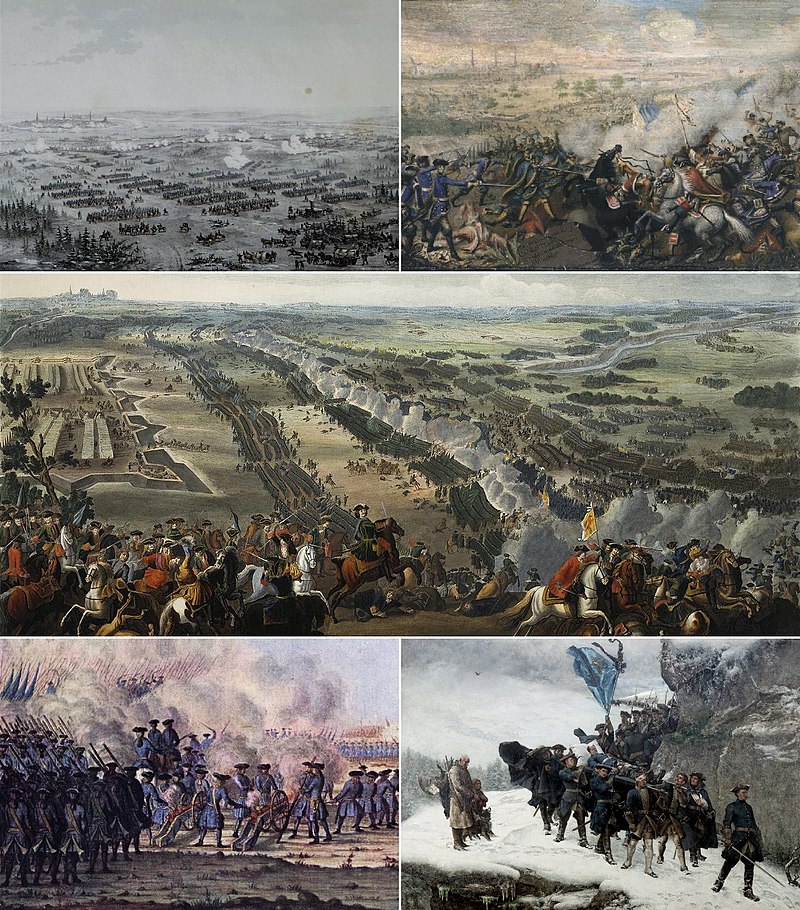
The Great Northern War: A Synopsis of Events
Denmark

Political
4 min read
Updated By: History Editorial Network (HEN)
Published:
The Great Northern War broke out as a power struggle between Sweden and a coalition of Russia, Denmark-Norway, and Saxony-Poland-Lithuania. It was sparked by tensions over territorial disputes, trade interests, and Sweden's dominance in the Baltic region. The war significantly impacted the balance of power in Northern Europe and reshaped the political landscape of the region.
Despite an initial advantage, Sweden faced formidable enemies and suffered a series of defeats that gradually weakened its position. The Battle of Narva in 1700 was a turning point where the Swedish king, Charles XII, achieved a decisive victory over the Russian forces. However, subsequent battles saw Sweden gradually losing ground to the coalition forces.
Denmark's participation in the war aimed to regain territories lost to Sweden in previous conflicts and to assert its influence in the Baltic Sea. Danish forces, led by King Frederick IV, engaged in several key battles alongside their allies against the Swedish army.
The war lasted for over two decades and resulted in significant territorial changes and power shifts. Sweden ultimately ceded large portions of its empire, including Finland, Estonia, Livonia, and parts of Pomerania, to the victorious coalition members. The Treaty of Nystad in 1721 marked the end of the war and solidified Russia's emergence as a major player in European politics.
The Great Northern War highlighted the importance of alliances, military innovations, and diplomatic strategies in shaping the outcome of conflicts between major European powers. It also showcased the rise of Russia as a formidable force in the region and the decline of Sweden's influence in Northern Europe.
#GreatNorthernWar #Sweden #Russia #Denmark #PowerStruggle #BalticRegion #TerritorialDisputes
Explore the Life Moments of
 AI Twin