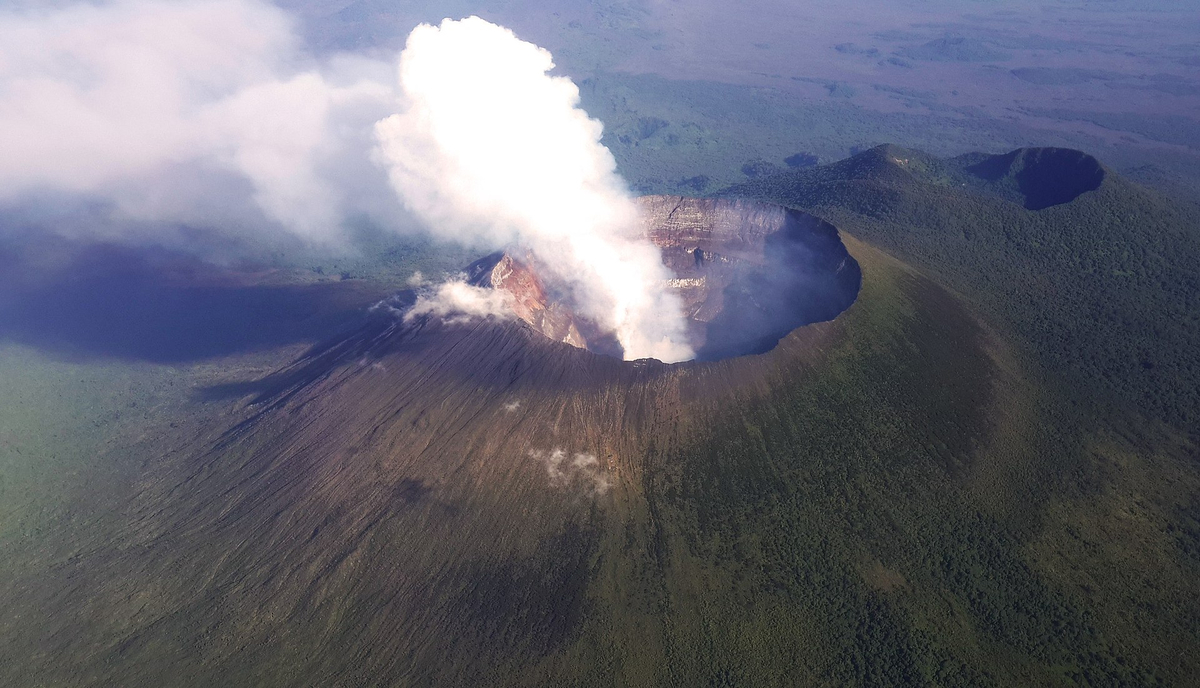
Mount Nyiragongo Eruption Impacts Surrounding Areas and Lake Kivu
Democratic Republic of the Congo

Natural Disasters
Geology
Environmental Events
3 min read
Updated By: History Editorial Network (HEN)
Published:
Updated:
On January 17, 2002, Mount Nyiragongo, located in the North Kivu province of the Democratic Republic of the Congo, erupted dramatically, releasing three streams of highly fluid lava that flowed at speeds of 64 km/h (40 mph) and reached widths of 46 m (50 yd). The eruption had devastating consequences for the nearby city of Goma, as one of the lava streams coursed directly through it, resulting in the tragic loss of 45 lives and leaving approximately 120,000 residents homeless. In response to the imminent danger, over 400,000 people were evacuated from Goma during the eruption. The lava flow also had a catastrophic impact on Lake Kivu, poisoning its waters and leading to the death of numerous aquatic plants and animals. The local airport faced significant disruptions, with only two planes managing to depart due to the risk of an explosion from stored petrol. The lava ultimately destroyed a runway and trapped several parked airplanes. The region continued to experience volcanic activity, with nearby Mount Nyamuragira erupting six months later, followed by additional eruptions in 2006 and January 2010. The 2002 eruption of Mount Nyiragongo remains a stark reminder of the potential dangers posed by active volcanoes in populated areas.

Explore the Life Moments of
 AI Twin