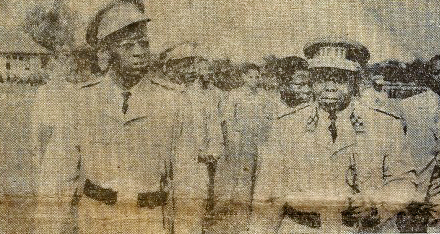
Mobutu Sese Seko seized power in the Democratic Republic of the Congo
Democratic Republic of the Congo
Politics
International Relations
3 min read
Updated By: History Editorial Network (HEN)
Published:
Updated:
In 1965, Mobutu Sese Seko seized power in the Democratic Republic of the Congo, establishing a single-party system and declaring himself head of state. His regime was heavily supported by the United States, which viewed him as a bulwark against communism in Africa. Mobutu's rule was characterized by severe human rights violations, political repression, and a pervasive cult of personality. He effectively neutralized political opponents by frequently reshuffling government officials, ensuring his grip on power. In 1971, he renamed the country the Republic of Zaire and the Congo River to the Zaire River, further solidifying his control. Despite receiving substantial international aid, the national infrastructure deteriorated, and Zaire became synonymous with kleptocracy, as corruption permeated all levels of government. As the 1990s approached, increasing demands for reform led Mobutu to declare the Third Republic in 1990; however, these reforms were largely superficial and failed to address the underlying issues. Mobutu's regime ultimately ended in 1997 when he was overthrown by Laurent-Désiré Kabila's rebellion. Mobutu died in exile in Morocco later that year, leaving behind a legacy of autocracy and mismanagement.

Explore the Life Moments of
 AI Twin