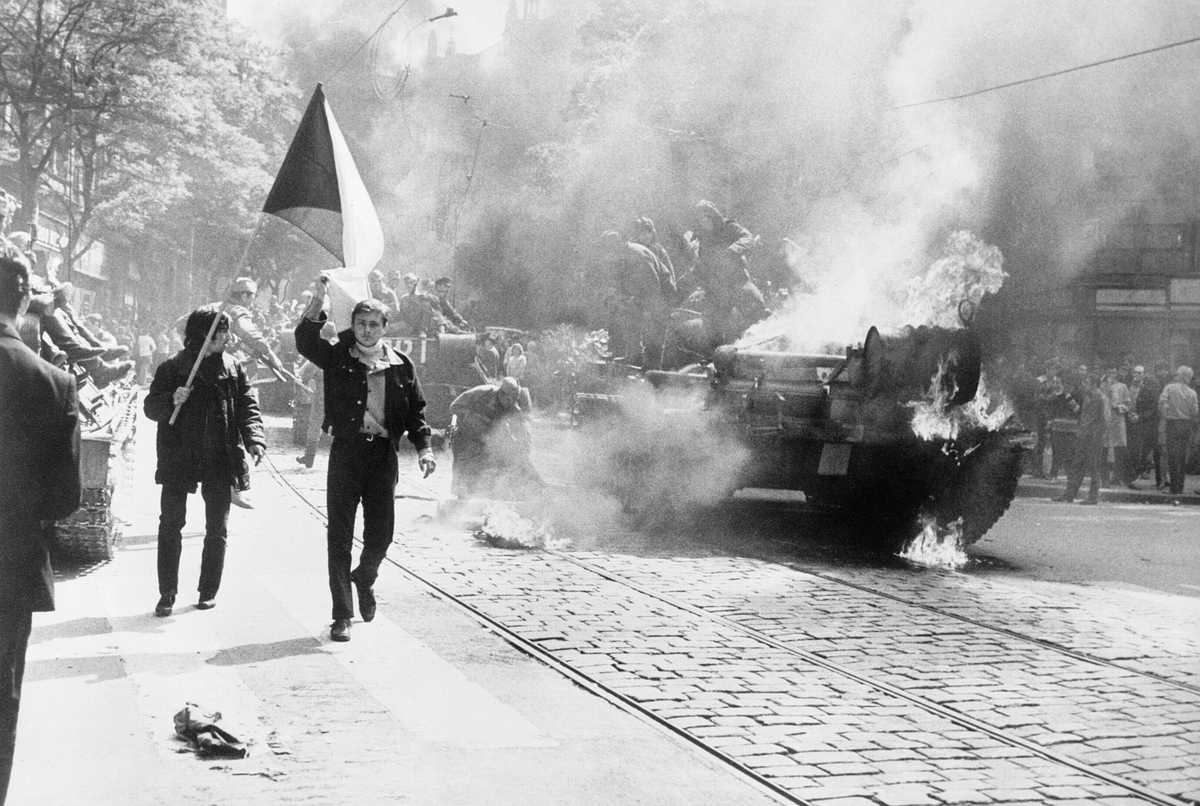
Invasion to suppress Prague Spring
Czech Republic
Political
3 min read
Updated By: History Editorial Network (HEN)
Published:
Following months of political liberalization known as the Prague Spring in Czechoslovakia, Warsaw Pact forces, led by the Soviet Union, invaded the country to suppress the reforms on August 21. The invasion intended to halt the movement towards democracy and socialism with a human face initiated by Czechoslovak leader, Alexander Dubček.
The invasion provoked widespread protests and demonstrations throughout Czechoslovakia, with citizens showing strong resistance against the foreign intervention. Despite the efforts to resist, the Warsaw Pact forces swiftly took control of key institutions and imposed a period of harsh censorship and repression.
The invasion of Czechoslovakia by the Warsaw Pact forces had significant repercussions on the global stage, leading to strained relations between the Soviet Union and Western countries. It also highlighted the limitations of communist reforms within the Eastern Bloc, demonstrating the lengths to which the Soviet Union would go to maintain control over its satellites.
In the aftermath, many Czechoslovak citizens felt a deep sense of betrayal and disillusionment, as their hopes for reform were crushed by foreign military intervention. The event served as a stark reminder of the challenges and complexities of political reform within the Eastern Bloc.
#PragueSpring #WarsawPact #Invasion #CzechRepublic #SovietUnion #ColdWar
Primary Reference
Warsaw Pact invasion of Czechoslovakia - Wikipedia

Explore the Life Moments of
 AI Twin