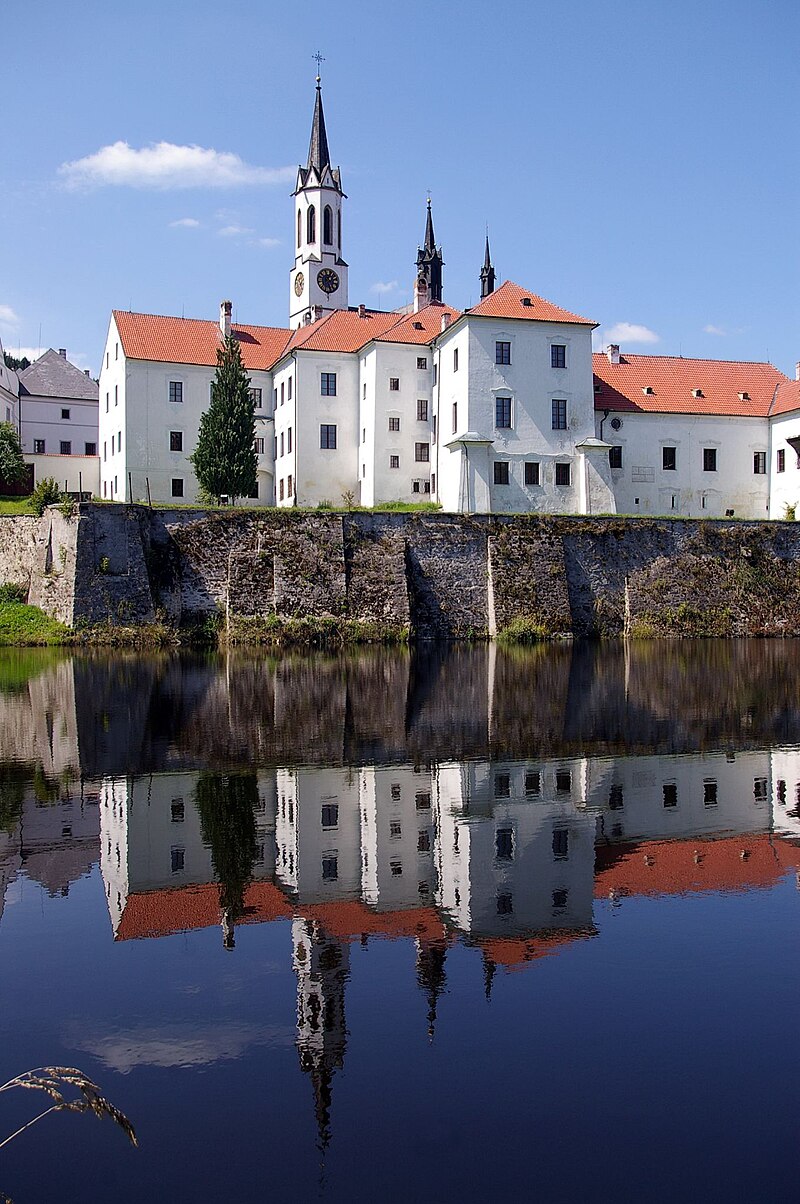
Establishment of Vyssi Brod Monastery
Czech Republic
Religion
3 min read
Updated By: History Editorial Network (HEN)
Published:
In 1259, a pivotal event took place in Czech history with the establishment of the Cistercian monastery in Vyssi Brod. The monastery was constructed near the Vltava River, surrounded by lush forests, providing an ideal contemplative retreat for the monks. The Cistercian order, known for its strict adherence to the Rule of St. Benedict, brought a renewed sense of spirituality and discipline to the region.
The monastery in Vyssi Brod quickly became a center of learning and culture, attracting scholars and artists from far and wide. The monks cultivated the land, developing it into a prosperous agricultural estate that benefited the local community. They also engaged in manuscript production, preserving and disseminating knowledge through their scriptorium.
The influence of the Cistercian monastery in Vyssi Brod extended beyond its walls, as the monks were actively involved in charitable works, providing aid to the poor and sick in the surrounding areas. Their dedication to prayer, work, and community service left a lasting impact on the region, shaping its spiritual and social fabric for centuries to come.
#CzechHistory #CistercianMonastery #VyssiBrod #MonasticInfluence
Primary Reference
The foundation of the Monastery of Vyšší Brod

Explore the Life Moments of
 AI Twin