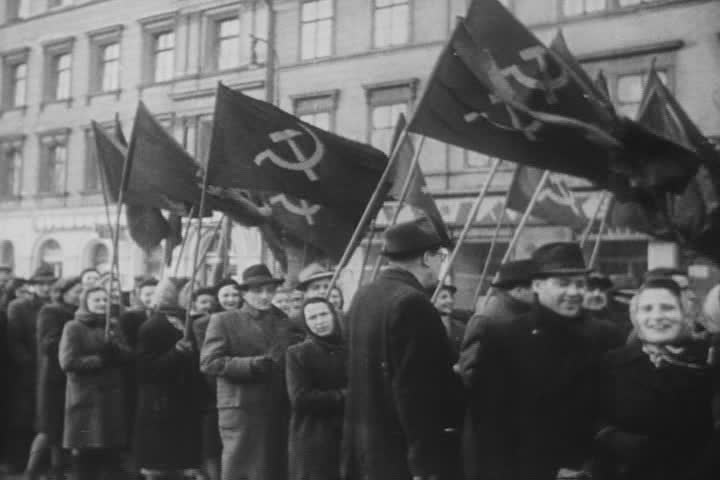
Communist Party Seizes Power in Czechoslovakia
Czech Republic
Political
3 min read
Updated By: History Editorial Network (HEN)
Published:
In 1948, the Communist Party seized power in Czechoslovakia through a coup d'état. The party had been gaining strength in the country as post-World War II reconstruction efforts failed to meet the needs of the population. The political landscape was polarized, and in this atmosphere, the Communist Party took advantage of their position in the government to gradually increase their influence.
The coup led to the establishment of a communist regime, marking the onset of a period of totalitarian rule characterized by censorship, suppression of dissent, and a shift towards a planned economy. Political opponents were persecuted, and the country became isolated from the Western world as it fell under the sphere of influence of the Soviet Union. Czechoslovakia's foreign policy aligned closely with that of the USSR, contributing to the deepening of the Cold War tensions in Europe.
The event had a lasting impact on the country, shaping its political and economic trajectory for decades to come. The Czechoslovakian people faced restricted freedoms and a lack of political plurality, which persisted until the late 1980s when the communist regime eventually collapsed.
#CommunistParty #Czechoslovakia #CoupdEtat #TotalitarianRule #ColdWar
Primary Reference
Communists take power in Czechoslovakia | February 25, 1948 ...

Explore the Life Moments of
 AI Twin