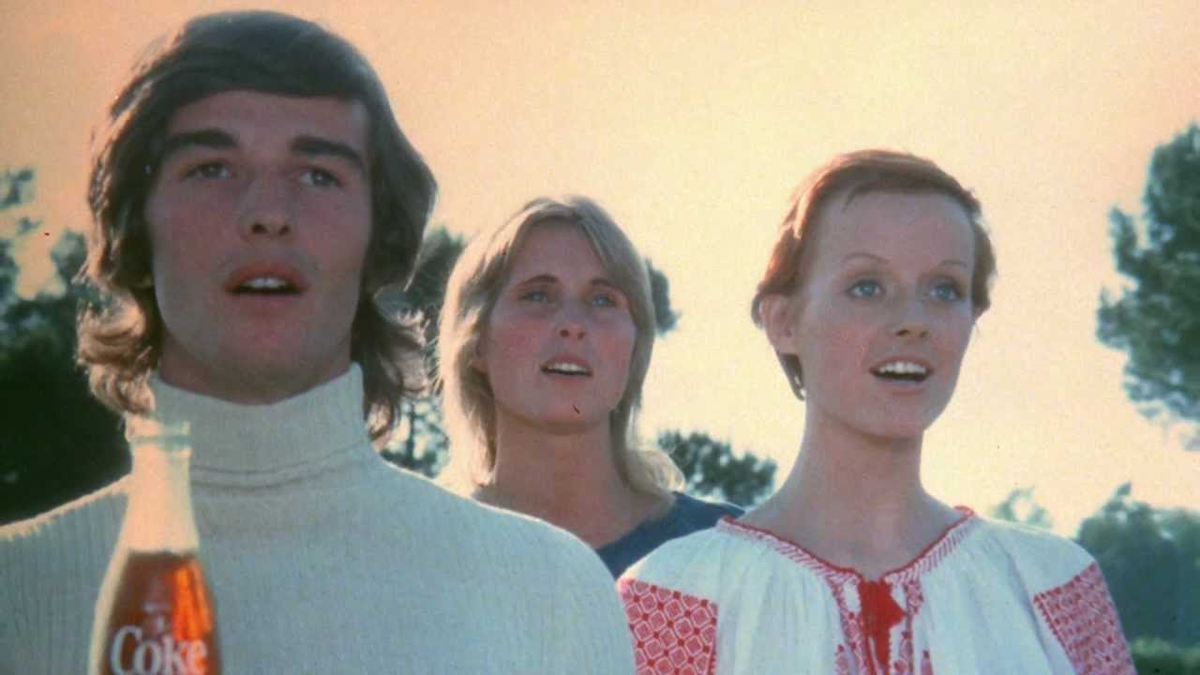
Iconic Hilltop TV Commercial Released
United States
Advertising
Television Commercials
Cultural Impact
7 min read
Updated By: History Editorial Network (HEN)
Published:
Updated:
In July 1971, The Coca-Cola Company officially launched the “Hilltop” television commercial in the United States, introducing the song “I’d Like to Buy the World a Coke” to a mass audience. Created by the advertising agency McCann Erickson, the advertisement became one of the most recognized and studied commercials in television history and helped redefine Coca-Cola’s global marketing identity during the early 1970s.
The commercial featured a diverse group of young people standing on a hilltop in Italy singing together while holding bottles of Coca-Cola. The advertisement promoted themes of international friendship, optimism, and cultural unity during a period marked by political tensions, anti-war protests, and social change across many countries. Rather than focusing primarily on the beverage itself, the campaign emphasized emotional connection and shared human experience, reflecting a broader shift in advertising toward lifestyle and identity based branding.
The idea for the campaign originated with McCann Erickson creative director Bill Backer, who reportedly developed the concept during a delayed flight stopover in Ireland. Along with songwriters Billy Davis, Roger Cook, and Roger Greenaway, Backer helped create the original jingle “I’d Like to Buy the World a Coke.” Early radio versions of the song were later expanded into the now famous television commercial filmed on a hillside outside Rome, Italy.
When the advertisement debuted on American television networks in July 1971, it quickly attracted widespread public attention. Viewers responded strongly to both the music and the imagery, and the campaign became internationally recognizable. Due to its popularity, the melody was later adapted into a full commercial song titled “I’d Like to Teach the World to Sing,” which became a major radio hit for separate recording groups including The New Seekers and The Hillside Singers.
The “Hilltop” campaign arrived during a period when Coca-Cola was aggressively expanding its international branding efforts. The company increasingly presented itself not only as a beverage manufacturer but also as a symbol of shared global culture. The advertisement’s success reinforced Coca-Cola’s reputation for emotionally driven marketing and influenced advertising strategies throughout the following decades.
Over time, the “Hilltop” commercial became deeply embedded in popular culture and advertising history. It has frequently appeared in retrospectives about influential television campaigns and remains associated with Coca-Cola’s broader image of international connection and optimism. The commercial was later referenced and parodied in films, television programs, and other media, further extending its cultural legacy.
Historical Significance
The “Hilltop” advertisement demonstrated how corporate marketing could use music, emotion, and multicultural imagery to create a globally recognizable message. Its influence extended beyond beverage advertising and helped shape modern branding strategies centered on identity, shared experience, and emotional storytelling.
#mooflife
#MomentOfLife
#Coca-cola
#HilltopCommercial
#AdvertisingHistory
#BrandMarketing
#CulturalImpact

Explore the Life Moments of
 AI Twin