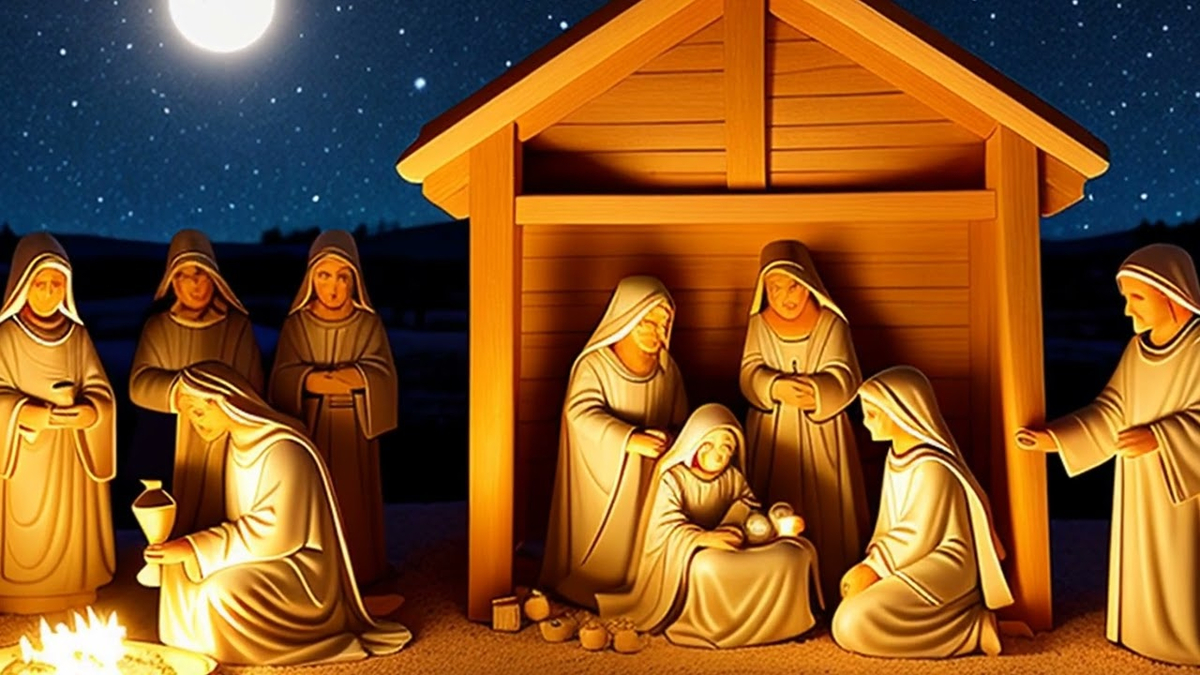
Supreme Court Lynch v. Donnelly: Religious display in public spaces upheld, influencing church-state debate.
Bethlehem
Political
Legal
4 min read
Updated By: History Editorial Network (HEN)
Published:
Updated:
The U.S. Supreme Court ruled in Lynch v. Donnelly that a city-owned Christmas display, which included a Nativity scene, did not violate the First Amendment. The case arose when Pawtucket, Rhode Island, erected a Christmas display in a public park. The display included traditional symbols like Santa Claus, reindeer, and a Nativity scene featuring the infant Jesus, Mary, and Joseph.
Residents and a local civil liberties organization challenged the display, arguing that it constituted a government endorsement of religion, thus violating the Establishment Clause of the First Amendment. The legal argument centered on whether a government-sponsored religious display could exist without infringing on the constitutional principle of the separation of church and state.
The Supreme Court ruled in favor of the city, with a majority opinion stating that the display had "legitimate secular purposes", including celebrating a national holiday and depicting the origins of that holiday. The Court held that not all religious symbols are strictly for religious promotion; they can also be a part of cultural heritage.
This ruling set a precedent for how religious symbols can be used in public spaces, influencing subsequent cases and debates about the separation of church and state. It indicated a more lenient interpretation of the Establishment Clause, acknowledging the potential dual nature of religious symbols.
#LynchvDonnelly #SupremeCourt #FirstAmendment #ReligiousDisplay #CulturalHeritage #ChristmasDisplay #ConstitutionalLaw #MoofLife
Primary Reference
Lynch v. Donnelly | Constitution Center

Explore the Life Moments of
 AI Twin