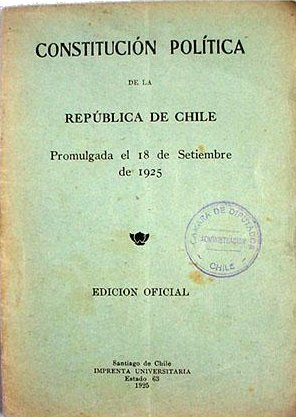
The Chilean Constitution of 1925 is adopted, reforming the political system and introducing a graduated income tax
Chile
8 min read
Updated By: History Editorial Network (HEN)
Published:
On August 30, 1925, Chile adopted a new constitution that significantly reformed the nation's political system and introduced a graduated income tax. This pivotal moment marked the end of the era of Parliamentarism that had dominated Chilean politics since the civil war of 1891 and ushered in a new phase of governance with a stronger presidential system. The 1925 Constitution aimed to address the political instability and inefficiencies that had plagued the parliamentary system, paving the way for more balanced and effective governance.
Background
The need for constitutional reform had been growing for years, driven by dissatisfaction with the existing parliamentary system. Under the system established after the 1891 Civil War, the executive branch was significantly weakened, and Congress held most of the power. This led to frequent changes in government, political fragmentation, and inefficiency. By the early 1920s, social unrest, economic challenges, and a demand for more effective governance underscored the urgency for change.
President Arturo Alessandri, elected in 1920, emerged as a key proponent of constitutional reform. His tenure was marked by efforts to modernize the state and address social issues, but he faced significant opposition from the entrenched parliamentary forces. Amid growing tensions and a brief military intervention in 1924 that temporarily ousted him, Alessandri returned to power with the backing of reformist military officers and initiated the process of drafting a new constitution.
The 1925 Constitution
The Chilean Constitution of 1925 introduced several crucial reforms aimed at creating a more balanced and stable political system. Key features included:
Strengthening the Presidency: The new constitution restored significant powers to the executive branch, giving the president greater authority over the administration and reducing the power of Congress to obstruct executive actions. The president could now dissolve Congress under certain conditions and call for new elections, fostering greater stability.
Separation of Powers: The constitution clearly delineated the roles and powers of the executive, legislative, and judicial branches, aiming to establish a more effective system of checks and balances.
Electoral Reforms: It introduced reforms to the electoral system, including the establishment of a secret ballot and measures to ensure fairer representation.
Social and Economic Policies: Reflecting the growing influence of social movements and the need for economic reform, the constitution included provisions for social justice, labor rights, and economic regulation.
Graduated Income Tax: One of the most significant economic reforms was the introduction of a graduated income tax. This measure aimed to address economic inequality by imposing higher tax rates on wealthier individuals and businesses, providing the state with additional resources to fund social programs and infrastructure.
Impact and Legacy
The adoption of the 1925 Constitution marked a turning point in Chilean political history. The strengthened presidency and clearer separation of powers helped to stabilize the government and reduce the political fragmentation that had characterized the previous parliamentary system. The constitution also laid the groundwork for significant social and economic reforms, addressing some of the pressing issues of inequality and social justice.
President Alessandri's role in the constitutional reform process solidified his legacy as a pivotal figure in Chilean politics. Despite ongoing political challenges and further periods of instability, the 1925 Constitution remained the foundation of Chile's political system until the military coup of 1973.
#MomentsOfLife #MoofLife_Moment #MoofLife #ChileanConstitution1925 #PoliticalReform #ArturoAlessandri #ChileanHistory #GraduatedIncomeTax #1925Constitution #PoliticalStability

Explore the Life Moments of
 AI Twin