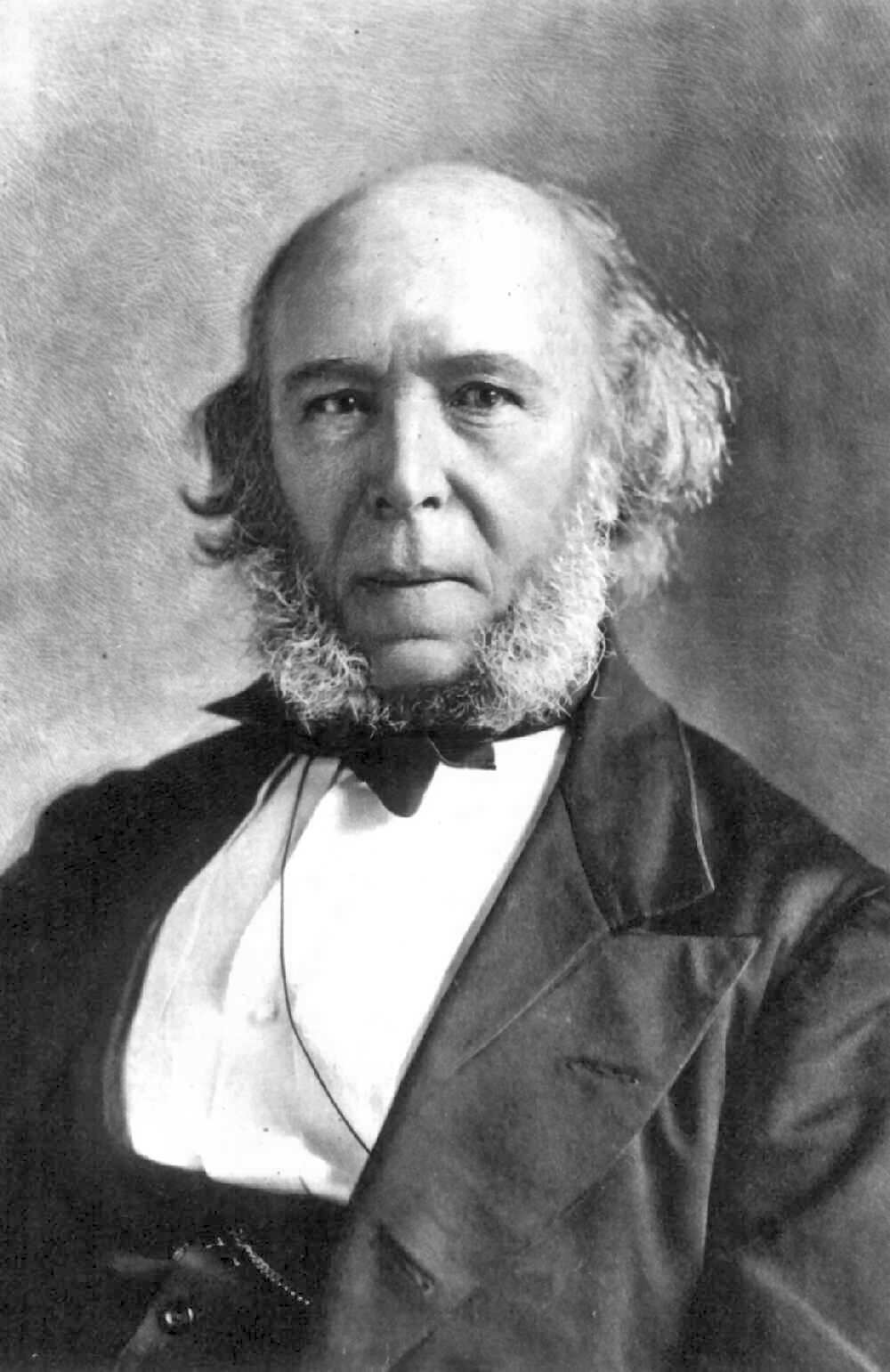
Herbert Spencer's "Social Statics" promotes human freedom, ties evolution to societal progress, and influences diverse fields.
United Kingdom
Philosophy
Evolution
3 min read
Updated By: History Editorial Network (HEN)
Published:
Updated:
Herbert Spencer, an English philosopher, published the book "Social Statics" where he combined ideas of human freedom and liberties with Lamarckian evolutionary theory. Spencer's work argued for a society where individuals were given maximum freedom, believing that social evolution would bring about the most beneficial results if left uninhibited. His connection to Lamarckian evolutionary theory posited that characteristics acquired during an individual's lifetime could be inherited by their offspring, thus promoting societal improvement over generations.
The publication of "Social Statics" contributed to the discourse on human rights and social governance, suggesting that the natural course of human development would ensure progress and equilibrium. Spencer's emphasis on the 'survival of the fittest' became a notable prelude to Charles Darwin's ideas on natural selection, although with distinct foundational differences.
Spencer's ideas influenced various fields, including sociology, anthropology, and political theory. His work laid a foundation for future discussions on the role of government versus individual liberties, promoting an early version of what would later be recognized as social Darwinism. The pursuit of knowledge and understanding in human society, influenced by evolutionary concepts, opened pathways for academic exploration and debate.
#Freedom #Liberties #LamarckianTheory #Evolution #CharlesDarwin #HumanRights #Philosophy #MoofLife
Explore the Life Moments of
 AI Twin