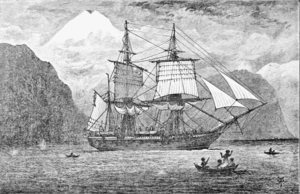
Darwin's Voyage on the HMS Beagle: A Turning Point in Evolutionary Theory
United Kingdom
Science
Evolution
4 min read
Updated By: History Editorial Network (HEN)
Published:
Updated:
When Charles Darwin returned home, he found a letter from his mentor, John Stevens Henslow. This letter proposed that Darwin join the HMS Beagle on its voyage. At the time, Darwin had recently completed his studies at the University of Cambridge, focusing on geology and natural history. Henslow’s letter indicated that the expedition was planned to chart the coastline of South America, which would involve extensive scientific research.
Darwin’s decision to accept this proposal would become a turning point in his life. The voyage provided him the opportunity to observe diverse forms of life and geological formations. These observations were instrumental in the development of his theory of natural selection. While aboard the HMS Beagle, Darwin meticulously collected specimens and recorded data, contributing significantly to the fields of biology and geology.
The HMS Beagle voyage lasted nearly five years and covered multiple continents. Darwin’s experiences during this period influenced his later works, most notably "On the Origin of Species." The empirical evidence gathered during the expedition allowed Darwin to challenge existing ideas about the immutability of species.
Henslow’s proposal and Darwin’s subsequent participation in the voyage were critical in shaping modern biological science. The insights gained from this journey laid the groundwork for evolutionary theory, a foundational concept in understanding biodiversity.
#Darwin #HMSBeagle #Evolution #NaturalHistory #Science #Discovery #MoofLife
Explore the Life Moments of
 AI Twin