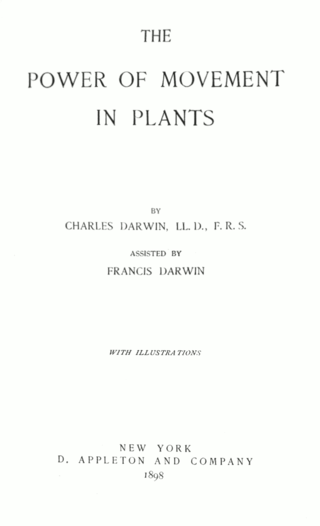
Darwin's "The Power of Movement in Plants" deepens understanding of plant behavior and responses.
United Kingdom
Science
Botany
3 min read
Updated By: History Editorial Network (HEN)
Published:
Updated:
Charles Darwin published "The Power of Movement in Plants," a work that deepened his exploration of plant behavior and responses. This publication followed his groundbreaking theory of evolution by natural selection. In this comprehensive study, Darwin examined how plants adapt to their environment through movements such as phototropism and gravitropism, in which plants grow towards light and against gravity, respectively.
Darwin, alongside his son Francis, conducted meticulous experiments, observing diverse plant species under various conditions. They documented how plants responded to stimuli, such as light and touch, challenging the prevailing notion that such responses were exclusive to the animal kingdom.
This work broadened the understanding of plant physiology and growth patterns, laying the groundwork for future research in botany and ecology. It demonstrated that plants possess a sophisticated means of interacting with their environment, a revelation that has implications for agriculture and horticulture.
#MoofLife #CharlesDarwin #Botany #PlantBehavior #ScientificResearch #EvolutionaryBiology #PlantPhysiology

Explore the Life Moments of
 AI Twin