"Darwin’s Evolutionary Theory: Origin of Species Revolutionizes Biological Science"
United Kingdom
Science
Evolution
4 min read
Updated By: History Editorial Network (HEN)
Published:
Updated:
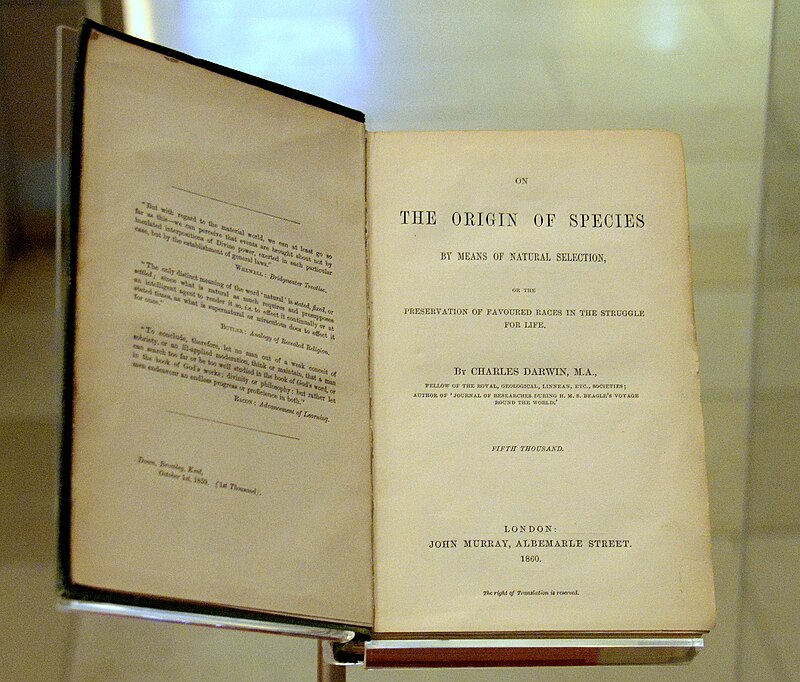
Charles Darwin published "On the Origin of Species," laying out his theory of evolution, which was supported by extensive evidence. The book emerged from Darwin's observations made during his voyage on the HMS Beagle, where he studied various species across continents and islands. Through meticulous research and collection of specimens, he noted the diversity and adaptability of species in different environments.
The publication marked a pivotal point in biological science, challenging traditional views and suggesting that species evolve over time through a process he termed "natural selection." Darwin proposed that individuals with traits better suited to their environment are more likely to survive and reproduce, passing those advantageous traits to the next generation.
Despite initial controversy and opposition from certain religious and scientific communities, Darwin’s work gained support within the scientific mainstream. It provided a unifying explanation for the diversity of life forms and significantly influenced fields such as genetics, paleontology, and ecology. Darwin's theory also laid the groundwork for modern evolutionary biology and spurred further research and discovery.
"On the Origin of Species" sold out on the day of its release, indicating keen public interest and curiosity. Darwin's methodical approach and detailed documentation of evidence from varied geographical locations lent credibility to his theory. The impact of Darwin's theory extended beyond biology, shaping philosophical, social, and cultural thought, influencing discussions on human existence and our connection to all living organisms.
#Darwin #Evolution #NaturalSelection #HistoryOfScience #Biology #MoofLife
Explore the Life Moments of
 AI Twin