Darwin's Dilemma: Sharing Credit for Natural Selection
United Kingdom
Science
Evolutionary Biology
4 min read
Updated By: History Editorial Network (HEN)
Published:
Updated:
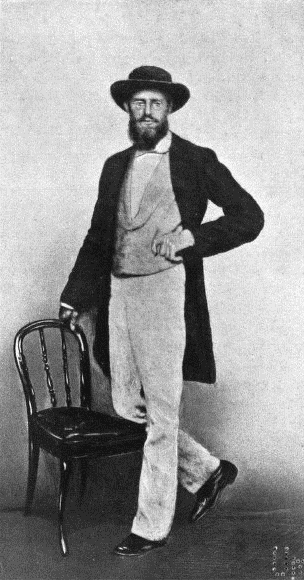
Charles Darwin received a pivotal manuscript from Alfred Russel Wallace. Wallace's paper articulated a theory of natural selection, closely mirroring Darwin's own ideas that he had meticulously developed over two decades. Darwin, recognizing the profound similarity between their theories, immediately shared the manuscript with Charles Lyell, his geologist colleague.
This development deeply concerned Darwin, as he had been contemplating publishing his theory but had not yet done so. Wallace's manuscript presented a thorough argument for natural selection, and Darwin feared he might lose priority for the groundbreaking theory. The contents of Wallace's writing were coherent and well-reasoned, emphasizing the role of natural selection in species adaptation and survival, concepts Darwin had extensively researched.
To address the situation, Lyell and botanist Joseph Dalton Hooker suggested a joint presentation of both Darwin's and Wallace's ideas to the Linnean Society. This prudent solution aimed to ensure both scientists received proper recognition. The event catalyzed the eventual publication of Darwin's "On the Origin of Species," which laid the foundation for evolutionary biology.
Wallace and Darwin's concurrent findings underscored the robustness of the natural selection theory. Darwin continued refining his work, heavily relying on empirical evidence and observations. This period marked a critical phase in the advancement of scientific understanding of evolutionary processes.
#MoofLife #Evolution #NaturalSelection #CharlesDarwin #AlfredRusselWallace
Explore the Life Moments of
 AI Twin