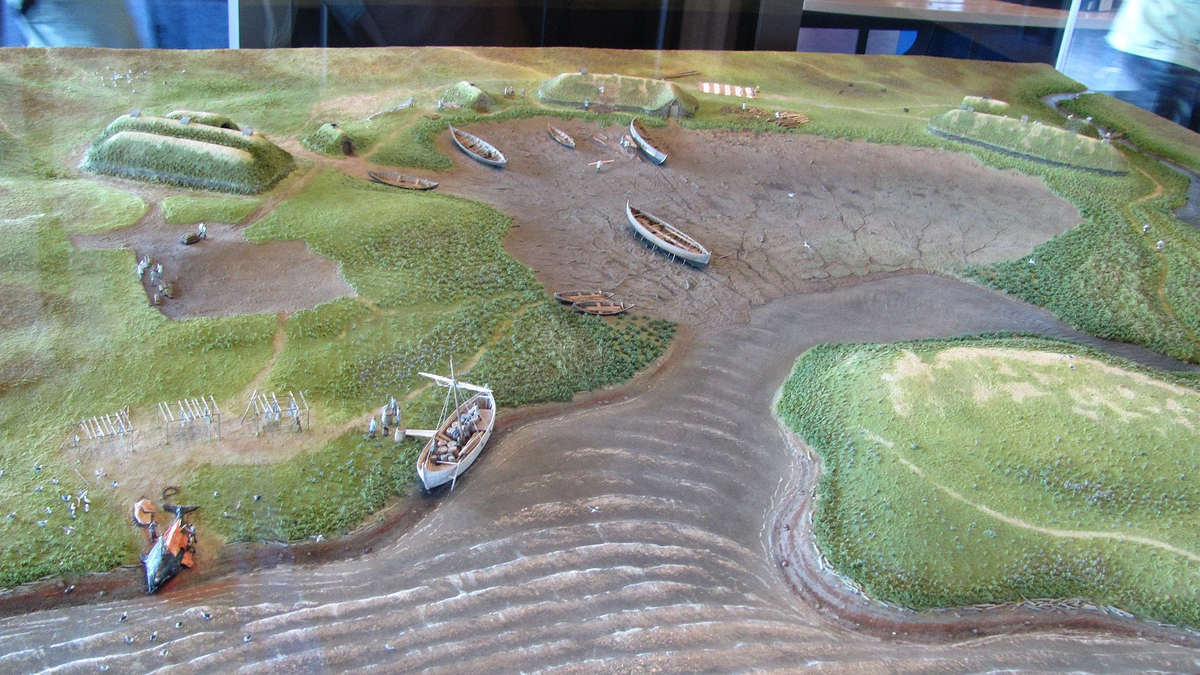
Viking settlement in Newfoundland shows earliest European presence in North America.
Canada
Archaeology
3 min read
Updated By: History Editorial Network (HEN)
Published:
In 1021, Viking settlers arrived in Newfoundland, establishing a settlement at L'Anse aux Meadows. This marks the earliest known European presence in North America. The Vikings, known for their seafaring prowess, were led by explorer Leif Erikson and sought new lands for trade and resources.
The impact of this settlement was significant as it challenged the long-held belief that Christopher Columbus was the first European to reach the Americas. The site at L'Anse aux Meadows provides concrete evidence of Norse presence in North America, shedding light on the extent of Viking exploration and contact with indigenous peoples.
The settlement consisted of several timber-framed turf structures, including dwellings and workshops, revealing insights into Viking daily life and craftsmanship. Archaeological findings at the site have also uncovered artifacts such as tools, nails, and personal items, further confirming the Norse presence in the region.
Today, L'Anse aux Meadows is a UNESCO World Heritage Site, attracting visitors from around the world to explore its historical significance. The site serves as a tangible link to the past, showcasing the early interactions between European settlers and indigenous cultures in North America.
#VikingExploration #EuropeanPresence #ArchaeologicalDiscovery #UNESCOHeritage #CulturalInteraction #LAnseAuxMeadows
Primary Reference
Evidence for European presence in the Americas in ad 1021 | Nature

Explore the Life Moments of
 AI Twin