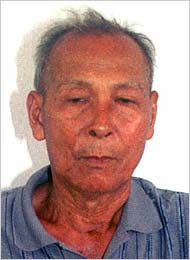
Leader of the Khmer Rouge, Ta Mok, dies in custody
Cambodia
8 min read
Updated By: History Editorial Network (HEN)
Published:
On July 21, 2006, Ta Mok, one of the most notorious leaders of the Khmer Rouge, died in custody in Phnom Penh, Cambodia. Born in 1926 as Chhit Choeun, Ta Mok played a significant role in the Khmer Rouge regime, which was responsible for the deaths of an estimated 1.7 million people during their rule from 1975 to 1979.
Early Life and Rise in the Khmer Rouge
Ta Mok, also known as "Brother Number Five" and "The Butcher," was a devout revolutionary who joined the Cambodian communist movement in the 1950s. His ruthless reputation was forged during the Khmer Rouge's guerrilla warfare against the Lon Nol government and later solidified during their brutal rule over Cambodia.
Role in the Khmer Rouge Regime
As a senior military commander and member of the Khmer Rouge's Central Committee, Ta Mok was directly involved in the policies and actions that led to mass executions, forced labor, and widespread famine. His influence was particularly felt in the southwestern zone of Cambodia, where he ordered mass purges and executions.
Ta Mok's nickname, "The Butcher," reflected his role in implementing the regime's genocidal policies. Under his command, thousands were killed, and countless others were subjected to torture and inhumane conditions. He was a key architect of the regime's vision of an agrarian utopia, which in reality translated to one of the worst genocides of the 20th century.
The Fall of the Khmer Rouge and Ta Mok's Arrest
After the Vietnamese invasion in 1979, which toppled the Khmer Rouge, Ta Mok continued to lead a guerrilla insurgency from remote jungle bases. However, the movement gradually weakened, and in 1997, Pol Pot, the infamous leader of the Khmer Rouge, was arrested by Ta Mok's faction in an internal power struggle. This event marked the beginning of the end for the Khmer Rouge as a significant force.
In March 1999, Ta Mok was finally captured near the Thai border and taken into custody by the Cambodian government. His arrest was a significant milestone in Cambodia's long struggle to bring Khmer Rouge leaders to justice.
Death and Legacy
Ta Mok spent the last years of his life in detention, facing charges of genocide, crimes against humanity, and war crimes. He died at the age of 80 in a military hospital in Phnom Penh on July 21, 2006, while still awaiting trial.
His death brought mixed reactions. For many Cambodians, it was a moment of relief that one of the most brutal figures of the Khmer Rouge was no longer alive. However, it also sparked frustration and disappointment, as he passed away without fully facing justice for his crimes. The Cambodian legal system, plagued by delays and corruption, had once again failed to bring closure to the survivors and families of victims.
Reflections on Justice and Accountability
Ta Mok's death highlighted the ongoing challenges in addressing the atrocities committed by the Khmer Rouge. The Extraordinary Chambers in the Courts of Cambodia (ECCC), established in 2006, has made significant strides in prosecuting senior leaders of the regime, but many view these efforts as too little, too late. The deaths of key figures like Ta Mok before they could be fully prosecuted underscore the complexities and delays inherent in post-genocide justice processes.
Ta Mok's life and actions remain a stark reminder of the cruelty and inhumanity that can arise from totalitarian ideologies. His legacy is a somber chapter in Cambodia's history, serving as both a lesson and a warning for future generations about the dangers of unchecked power and extremist rule.
#MomentsOfLife #MoofLife_Moment #MoofLife #KhmerRouge #CambodianHistory #JusticeDelayed
Explore the Life Moments of
 AI Twin