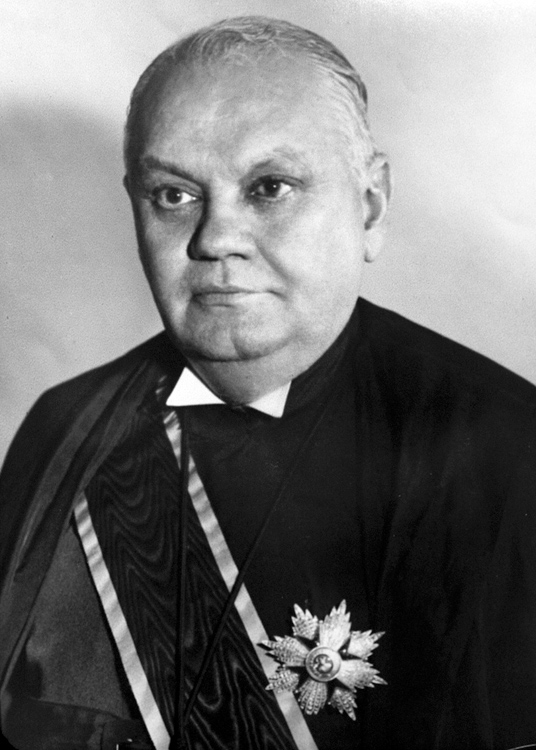
President Vargas resigns, José Linhares becomes acting president, beginning the period known as the Fourth Brazilian Republic at the end of his term
Brazil
8 min read
Updated By: History Editorial Network (HEN)
Published:
On October 29, 1945, President Getúlio Vargas of Brazil resigned, marking a significant turning point in the country's political history. This event led to the installation of José Linhares as acting president and the beginning of the period known as the Fourth Brazilian Republic.
Background
Getúlio Vargas had been a dominant figure in Brazilian politics since he first came to power in 1930, following a coup that ended the First Brazilian Republic. His initial period in office, known as the Vargas Era, lasted until 1945. Vargas's rule was characterized by significant economic and social reforms, including the establishment of labor rights and social security systems, which earned him widespread support among the working class.
However, Vargas's later years in power were marked by increasing authoritarianism. In 1937, he dissolved the congress and instituted the Estado Novo (New State), a dictatorial regime that centralized power and curtailed civil liberties. Despite the authoritarian nature of his rule, Vargas maintained popularity through his populist policies and charismatic leadership.
Resignation of Vargas
By 1945, Brazil was undergoing significant political changes. The end of World War II brought a wave of democratization across the world, and there was growing pressure within Brazil for a return to democratic governance. The military, which had been a crucial supporter of Vargas, began to distance itself from his regime, advocating for democratic reforms and free elections.
Facing mounting opposition and a changing political landscape, Vargas saw the writing on the wall. On October 29, 1945, under pressure from the military and political elites, he resigned from the presidency. This resignation was a peaceful transition and marked the end of Vargas's fifteen-year rule.
José Linhares and the Interim Government
Following Vargas's resignation, José Linhares, the President of the Supreme Federal Court, assumed the role of acting president. Linhares was seen as a neutral figure who could oversee the transition to a democratic government. His tenure was short but pivotal in setting the stage for the establishment of the Fourth Brazilian Republic.
The Fourth Brazilian Republic
The Fourth Brazilian Republic was officially inaugurated on January 31, 1946, following the election of General Eurico Gaspar Dutra as president. This period marked a return to democratic rule and was characterized by a new constitution, which was promulgated in 1946. The new constitution restored democratic institutions, including a bicameral legislature and guaranteed civil liberties.
Impact and Legacy
The resignation of Vargas and the establishment of the Fourth Brazilian Republic represented a critical shift in Brazilian politics. This period is often seen as a time of political stabilization and economic growth. The new democratic framework allowed for greater political participation and saw the emergence of various political parties and movements.
However, this period also faced challenges, including economic fluctuations and political instability, culminating in the military coup of 1964, which ended the Fourth Republic and ushered in a military dictatorship that lasted until 1985.
Getúlio Vargas's Return
Despite his resignation in 1945, Getúlio Vargas remained a significant political figure in Brazil. In 1950, he made a remarkable political comeback, winning the presidential election and returning to power through democratic means. His second presidency focused on nationalistic economic policies and further social reforms, but it ended tragically with his suicide in 1954 amid political turmoil and pressure from his opponents.
#GetulioVargas #FourthBrazilianRepublic #BrazilianHistory #1945 #PoliticalTransition #Democratization #JoséLinhares #BrazilianPolitics #MomentsOfLife #MoofLife_Moment #MoofLife

Explore the Life Moments of
 AI Twin