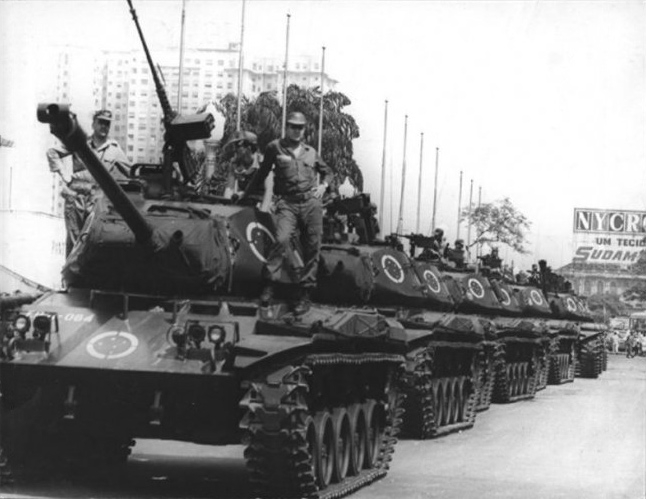
Military Junta Rules Brazil After President's Resignation
Brazil
Political
Authoritarianism
3 min read
Updated By: History Editorial Network (HEN)
Published:
Updated:
Following the sudden illness and resignation of President Artur da Costa e Silva, the Brazilian Military Junta took control of the country in 1969. The junta, composed of high-ranking military officials, aimed to maintain order and stability in Brazil during a time of political unrest and social upheaval. Their rule was characterized by strict censorship, suppression of dissent, and human rights violations.
The Military Junta of 1969 exercised authoritarian control over the government, with a focus on strengthening state power and cracking down on perceived threats to national security. Political opponents, activists, and dissidents were often targeted, leading to a climate of fear and oppression.
The impact of the Brazilian Military Junta of 1969 was profound, shaping the country's political landscape for years to come. The junta's policies and actions set the stage for a period of repression and censorship, leaving a lasting legacy of authoritarianism in Brazil.
#Brazil #MilitaryJunta #Authoritarianism #PoliticalUnrest #HumanRightsViolations

Explore the Life Moments of
 AI Twin