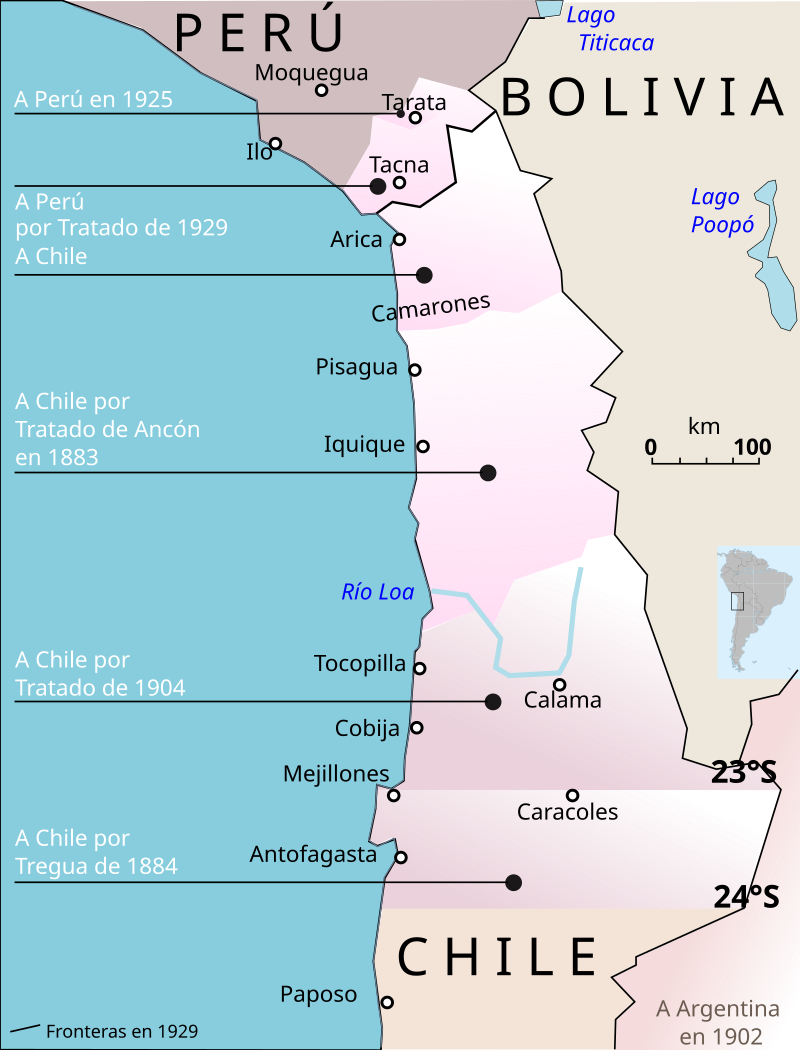
Loss of Coastal Territories by Treaty of Valparaiso
Bolivia

Political
3 min read
Updated By: History Editorial Network (HEN)
Published:
The Treaty of Valparaiso was a pivotal event in Bolivian history, formalizing the country's loss of its coastal territories to Chile. The treaty marked the end of the War of the Pacific, a conflict between Bolivia, Chile, and Peru over control of the region's lucrative nitrate and copper resources. Following Bolivia's defeat in the war, the treaty solidified Chile's control over the disputed territories, cutting Bolivia off from the Pacific Ocean. This loss has had enduring economic and geopolitical consequences for Bolivia, as the country remains landlocked to this day.
The signing of the Treaty of Valparaiso was a bitter moment for Bolivia, symbolizing the country's diminished territorial sovereignty and its struggle to assert its place in the region. The treaty's repercussions continue to reverberate through Bolivia's political landscape, shaping its relationships with neighboring countries and its approach to international diplomacy.
The Treaty of Valparaiso underscores Bolivia's ongoing efforts to regain access to the sea and its quest for territorial justice. It stands as a reminder of the complex legacy of colonialism and conflict in Latin America, highlighting the lasting impact of historical disputes on contemporary geopolitics. #Bolivia #TreatyofValparaiso #WarofthePacific #TerritorialLoss #LandlockedNation

Explore the Life Moments of
 AI Twin