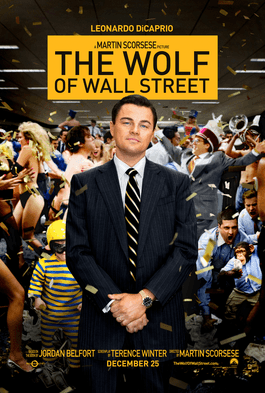
The Wolf of Wall Street
Entertainment
4 min read
Updated By: History Editorial Network (HEN)
Published:
Updated:
The Wolf of Wall Street (2013) is a blistering, darkly comedic biographical crime drama directed by Martin Scorsese, chronicling the rise and excess-fueled downfall of Jordan Belfort, a real-life stockbroker who built a fortune through fraud and market manipulation in the late 1980s and 1990s. Leonardo DiCaprio stars as Belfort in one of his most energetic and unhinged performances, portraying a man consumed by greed, drugs, power, and self-delusion. The film follows Belfort’s journey from an eager young trader to the founder of Stratton Oakmont, where he and his partners—including Jonah Hill’s erratic and vulgar Donnie Azoff—engage in debauched, relentless schemes fueled by sex, cocaine, and money. The narrative unfolds as a chaotic descent into moral rot, presented with Scorsese’s signature kinetic energy, fourth-wall-breaking narration, and dark irony.
The film was a major box office success, grossing over $406 million worldwide on a $100 million budget, making it Scorsese’s highest-grossing film to date. It received five Academy Award nominations: Best Picture, Best Director, Best Actor for DiCaprio, Best Supporting Actor for Hill, and Best Adapted Screenplay for Terence Winter, though it did not win in any category. DiCaprio, however, won the Golden Globe for Best Actor in a Comedy or Musical for his fearless, manic portrayal. The film was both praised and criticized for its unapologetic depiction of excess, with some accusing it of glorifying Belfort’s lifestyle, while others saw it as a savage satire of capitalism’s moral bankruptcy. The Wolf of Wall Street has since become a cultural phenomenon, known for its outrageous scenes, quotable lines, and no-holds-barred performances. Its legacy endures as a bold, divisive, and endlessly rewatchable examination of how far people will go when driven by unchecked ambition and zero accountability.
Primary Reference
The Wolf of Wall Street (2013) - Martin Scorsese | AllMovie

Explore the Life Moments of
 AI Twin