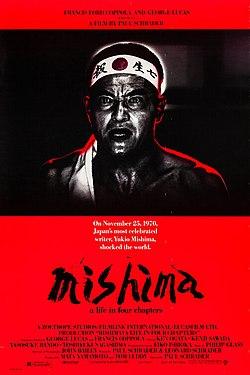
Mishima: A Life in Four Chapters
Entertainment
4 min read
Updated By: History Editorial Network (HEN)
Published:
Updated:
Mishima: A Life in Four Chapters (1985) is a visually stunning and psychologically intense biographical drama directed by Paul Schrader, exploring the life, philosophy, and death of Yukio Mishima—one of Japan’s most controversial literary figures. The film is structured into four interwoven segments: black-and-white flashbacks of Mishima’s real life, color footage of the final day leading to his ritual suicide in 1970, and vivid theatrical dramatizations of three of his novels (The Temple of the Golden Pavilion, Kyoko’s House, and Runaway Horses), each reflecting aspects of his inner world and obsession with beauty, death, and national identity.
Ken Ogata plays Mishima with quiet, steely resolve, portraying him as a man torn between artistic brilliance and extremist ideology. Schrader balances fact and metaphor, refusing to deliver a conventional biopic. Instead, the film becomes an operatic fusion of biography, philosophy, and stylized fiction—underscored by a haunting score composed by Philip Glass. The set design, particularly in the dramatized chapters, is highly theatrical and symbolic, contrasting with the stark realism of the real-world segments.
Despite being banned in Japan upon release due to its depiction of Mishima’s political extremism and homosexuality, Mishima: A Life in Four Chapters was acclaimed internationally. It was screened at Cannes, received praise for its daring structure and artistic ambition, and has since been recognized as one of Schrader’s most accomplished works. Though it was not a box office hit, the film developed a strong cult following and is often studied for its unique narrative form and bold aesthetic. Its legacy lies in its uncompromising vision—a portrait of a man who blurred the line between life and art, and sought transcendence through destruction.
Primary Reference
Review: 'Mishima – A Life in Four Chapters

Explore the Life Moments of
 AI Twin