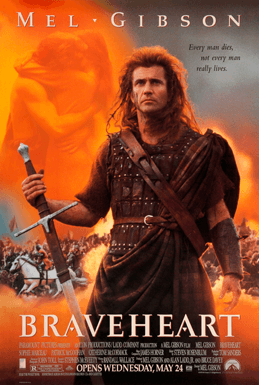
Braveheart
Entertainment
4 min read
Updated By: History Editorial Network (HEN)
Published:
Updated:
Braveheart (1995) is a sweeping and emotionally charged historical biographical epic directed by and starring Mel Gibson, portraying the legendary 13th-century Scottish warrior William Wallace. The film dramatizes Wallace’s transformation from a grieving farmer into the fearless leader of a rebellion against English rule under King Edward I, following the brutal execution of his secret wife, Murron. Driven by vengeance and patriotism, Wallace unites a fractured Scotland and leads a bloody uprising, culminating in his eventual capture, torture, and martyrdom—all while rallying his people with the rallying cry of freedom.
Visually grand and emotionally potent, the film blends intense battle scenes with romantic tragedy and themes of honor, betrayal, and sacrifice. While the script takes heavy liberties with historical facts—altering timelines, characters, and events—it succeeds as mythic storytelling, turning Wallace into a larger-than-life symbol of resistance. James Horner’s soaring score and John Toll’s sweeping cinematography elevate the film into a rousing cinematic experience.
Braveheart was both a box office hit and a major awards contender, grossing over $210 million worldwide on a budget of roughly $70 million. It earned ten Academy Award nominations and won five, including Best Picture, Best Director for Gibson, and Best Cinematography. Despite criticism from historians for its inaccuracy, the film struck a chord with audiences and left a lasting cultural impact. Its legacy endures as one of the most iconic historical epics ever made, remembered for its passion, scale, and a central performance that turned Mel Gibson into both a critical and commercial force in Hollywood.
Primary Reference
Making Of Braveheart Behind The Scenes Documentary

Explore the Life Moments of
 AI Twin