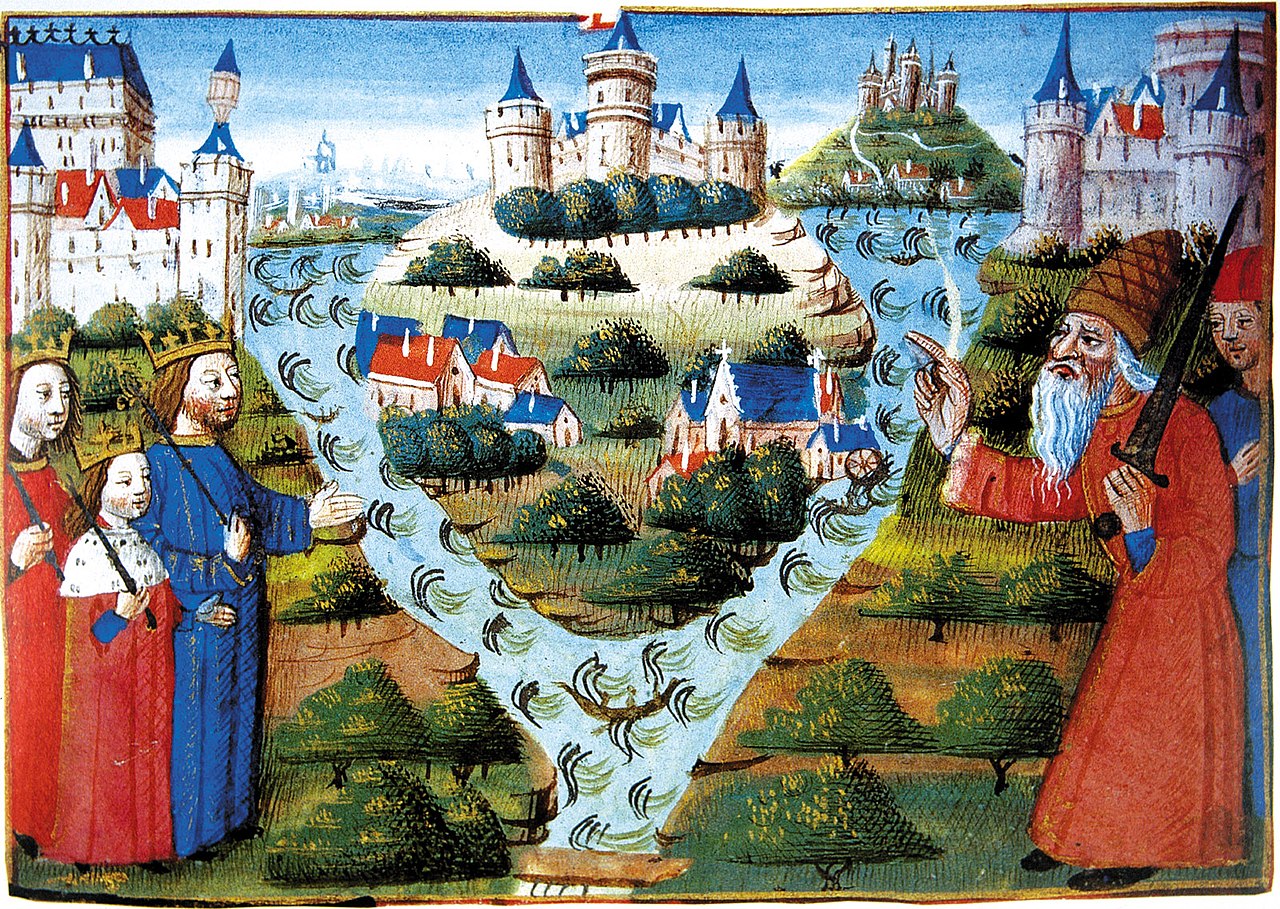
Treaty of Verdun and the Kingdom of Lotharingia
Belgium

Political
4 min read
Updated By: History Editorial Network (HEN)
Published:
In the aftermath of a turbulent period following the death of Emperor Charlemagne, the Treaty of Verdun emerged as a pivotal agreement in the shaping of Europe’s political landscape. The treaty saw the division of the vast Carolingian Empire among Charlemagne’s grandsons, resulting in the establishment of distinct realms. One of these territories, known as the Kingdom of Lotharingia, encompassed regions that would later form part of present-day Belgium.
The division of the Carolingian Empire through the Treaty of Verdun laid the foundation for the emergence of the Kingdom of Lotharingia, an area that covered a significant portion of modern Belgium. The political ramifications of this division were far-reaching, setting the stage for future power struggles and shaping the identities of the emerging European nations. Belgium, in particular, found itself situated within the boundaries of this new kingdom, marking the beginning of its unique historical trajectory within the region.
The formation of the Kingdom of Lotharingia within the broader context of the Treaty of Verdun underscored the complexities of medieval power dynamics and the challenges of maintaining territorial unity in the wake of a powerful ruler’s passing. The treaty's implications reverberated throughout Europe, influencing alliances, conflicts, and the evolution of distinct political entities.
The Kingdom of Lotharingia, which included territories that would eventually become part of present-day Belgium, thus holds a crucial place in the historical narrative of the region. The events surrounding the Treaty of Verdun created a legacy that would shape the geopolitical realities of Europe for centuries to come, leaving an indelible mark on the history of Belgium and its neighboring lands.
#TreatyofVerdun #KingdomofLotharingia #BelgiumHistory

Explore the Life Moments of
 AI Twin