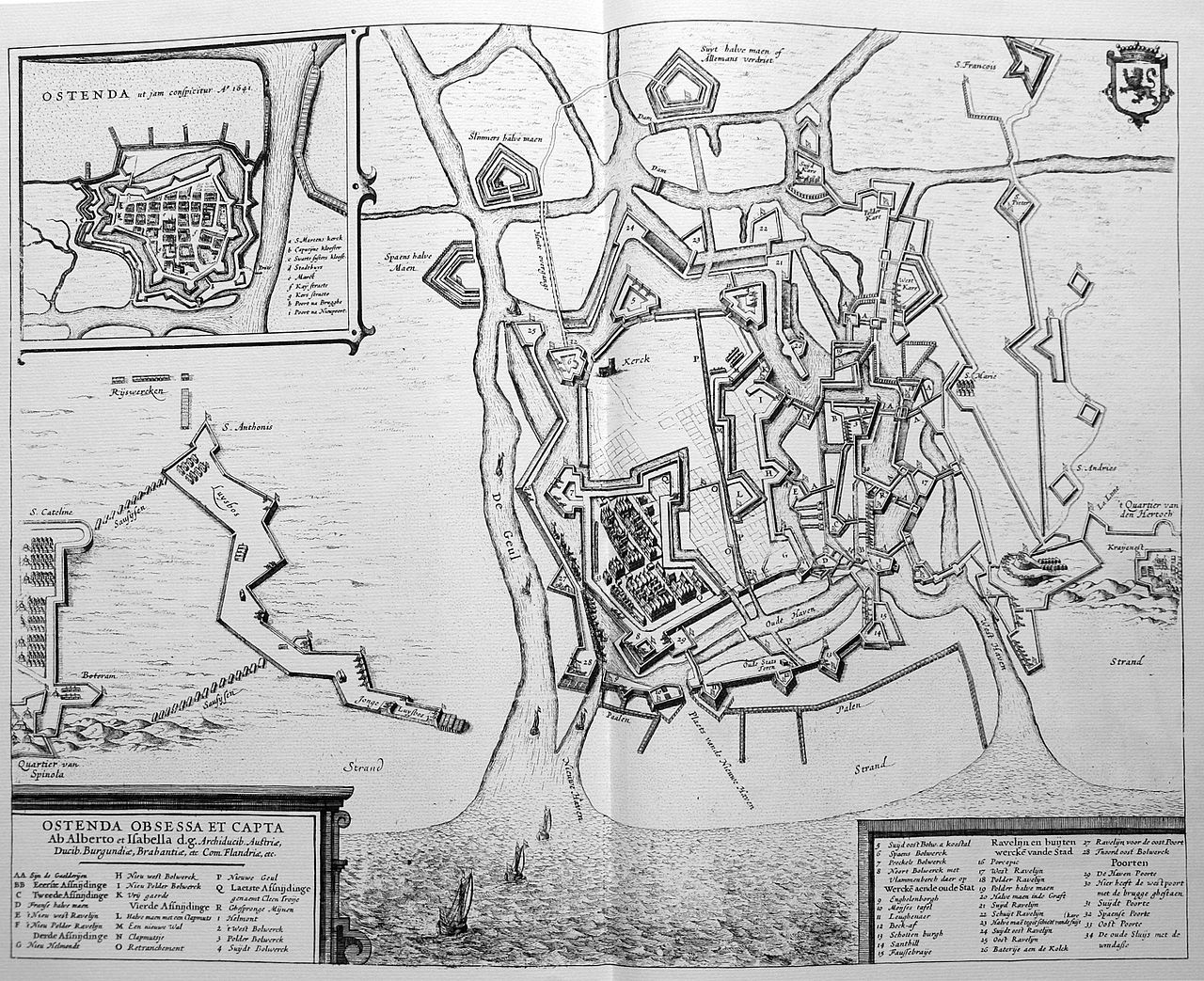
Siege of Ostend: Longest Battle in Eighty Years' War
Belgium

Military
4 min read
Updated By: History Editorial Network (HEN)
Published:
In Ostend, Belgium, the Spanish Army initiated the longest siege in the Eighty Years' War. The conflict was fueled by religious tensions and power struggles between the Spanish Habsburgs and the Dutch rebels. Ostend, a strategically located port city, became a focal point in the war due to its significance for trade and military control.
The siege of Ostend lasted for over three years, from July 5, 1601, to September 20, 1604. The Spanish Army, led by Archduke Albert of Austria, sought to capture the city from the Dutch rebels. The siege was marked by intense fighting, with both sides enduring significant casualties and hardships. The Spanish forces utilized innovative military tactics, such as the use of mining and counter-mining operations, to try and break the defenses of Ostend.
The impact of the siege of Ostend was profound. The prolonged conflict drained resources and manpower from both the Spanish and Dutch sides, leading to economic strain and political unrest. The siege also showcased the development of military technology and strategy during the early modern period, with both sides adapting to the challenges of siege warfare.
Ultimately, the siege of Ostend ended in a decisive victory for the Spanish Army, as they were able to capture the city and secure their control over the region. However, the high cost of the siege in terms of lives and resources highlighted the brutality and complexity of warfare during this period.
The siege of Ostend exemplifies the fierce and protracted nature of the Eighty Years' War, as well as the strategic importance of key cities in shaping the outcome of the conflict. It remains a significant event in the history of Belgium and the wider European struggle for power and influence. #Ostend #SpanishArmy #Siege #EightyYearsWar #Belgium

Explore the Life Moments of
 AI Twin