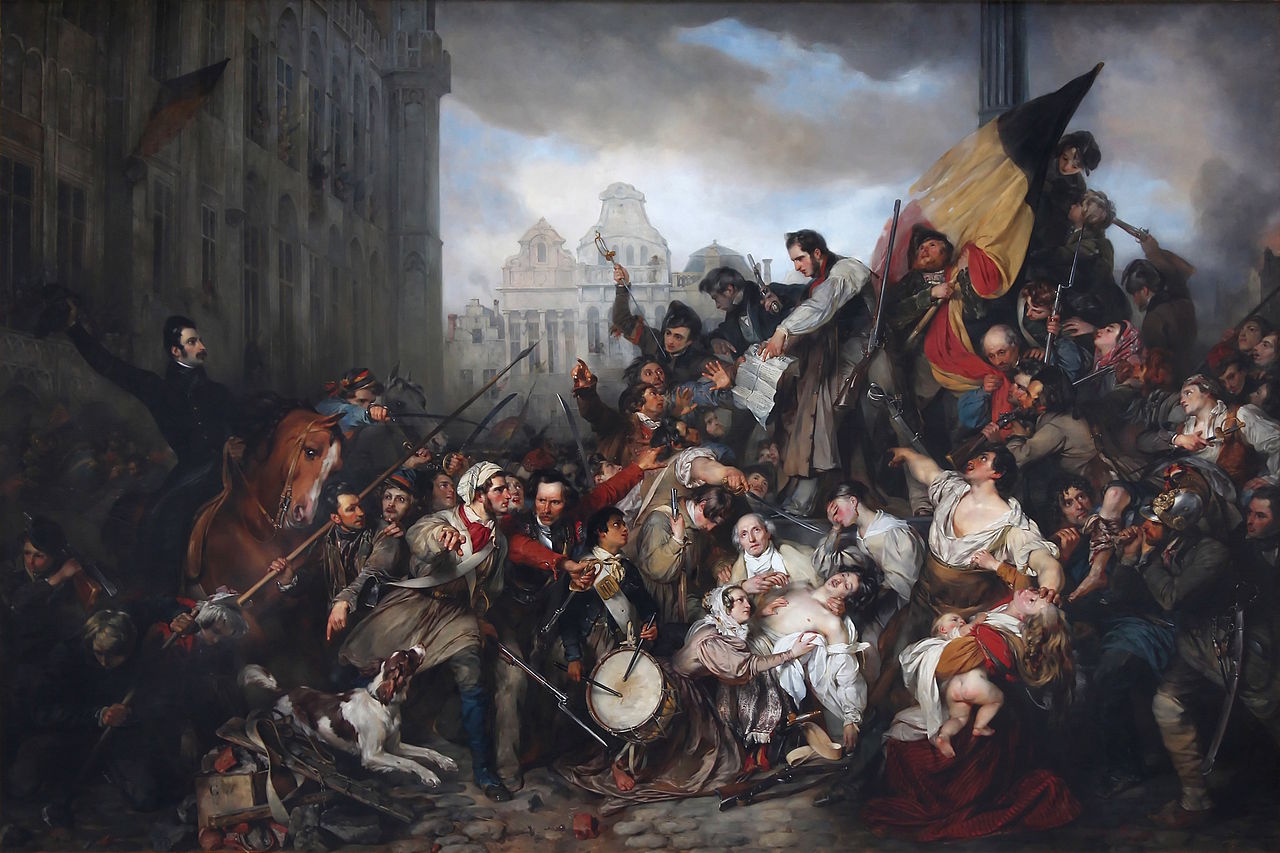
Independence from the Netherlands through Belgian Revolution.
Belgium

Political
Nationalism
4 min read
Updated By: History Editorial Network (HEN)
Published:
In 1830, tensions between the people of Belgium and the United Kingdom of the Netherlands reached a breaking point, leading to the Belgian Revolution. The Belgians were dissatisfied with the Dutch King's authoritarian rule and his favoritism towards the northern provinces over the southern regions comprising modern-day Belgium.
The revolution began with a performance at the Brussels opera house, sparking protests that quickly escalated into violent clashes between Belgian civilians and Dutch troops. As the conflict grew, Belgian revolutionaries declared their independence from the United Kingdom of the Netherlands.
The revolution culminated in the establishment of an independent Belgian state, recognized by major European powers in 1831. Leopold of Saxe-Coburg, a German prince, was chosen as the first King of the Belgians. The new nation adopted a liberal constitution, guaranteeing freedoms and rights to its citizens.
The Belgian Revolution had far-reaching implications, not only for Belgium but also for the broader European political landscape. It inspired other nationalist movements across Europe and contributed to the wave of revolutions that swept the continent in the 19th century. Belgium's successful bid for independence set a precedent for self-determination and influenced subsequent struggles for national sovereignty.
Today, Belgium celebrates the legacy of the revolution as a defining moment in its history, commemorating the courage and determination of those who fought for freedom and independence. The events of that time continue to shape Belgium's national identity and its commitment to democracy and individual rights.
#BelgianRevolution #Independence #Nationalism #EuropeanHistory

Explore the Life Moments of
 AI Twin