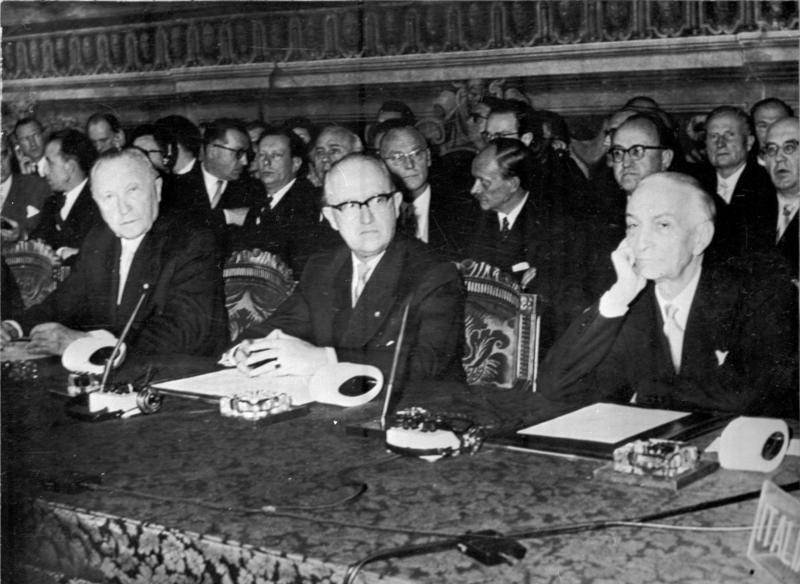
Founding Treaty Unites European Nations
Belgium
Political
Global Trade
4 min read
Updated By: History Editorial Network (HEN)
Published:
The Treaty of Rome was signed in Belgium by six founding countries: France, West Germany, Italy, Luxembourg, the Netherlands, and Belgium. This historical agreement laid the foundation for the European Economic Community, establishing a common market among the signatory nations. By promoting economic cooperation and trade integration, the treaty aimed to foster stability and prosperity in post-World War II Europe.
The Treaty of Rome had a lasting impact on the European continent, paving the way for the eventual formation of the European Union. It led to the abolition of trade barriers and the implementation of common policies in areas such as agriculture, competition, and trade. The treaty also symbolized a commitment to peace and unity among nations that had previously been torn apart by conflict.
In the years following the signing of the Treaty of Rome, the European Economic Community evolved into a political and economic union, with additional countries joining and deepening integration through various treaties and agreements. The principles enshrined in the treaty continue to shape the functioning of the European Union today, influencing policies and decision-making at the supranational level.
The signing of the Treaty of Rome marked a pivotal moment in European history, bringing together countries with diverse histories and cultures in pursuit of common goals. It set a precedent for cooperation and solidarity that continues to guide the European project. The legacy of the treaty is evident in the European Union's emphasis on unity, peace, and prosperity for its member states and citizens.
#TreatyOfRome #EuropeanIntegration #UnityInDiversity #Belgium #EuropeanUnion

Explore the Life Moments of
 AI Twin