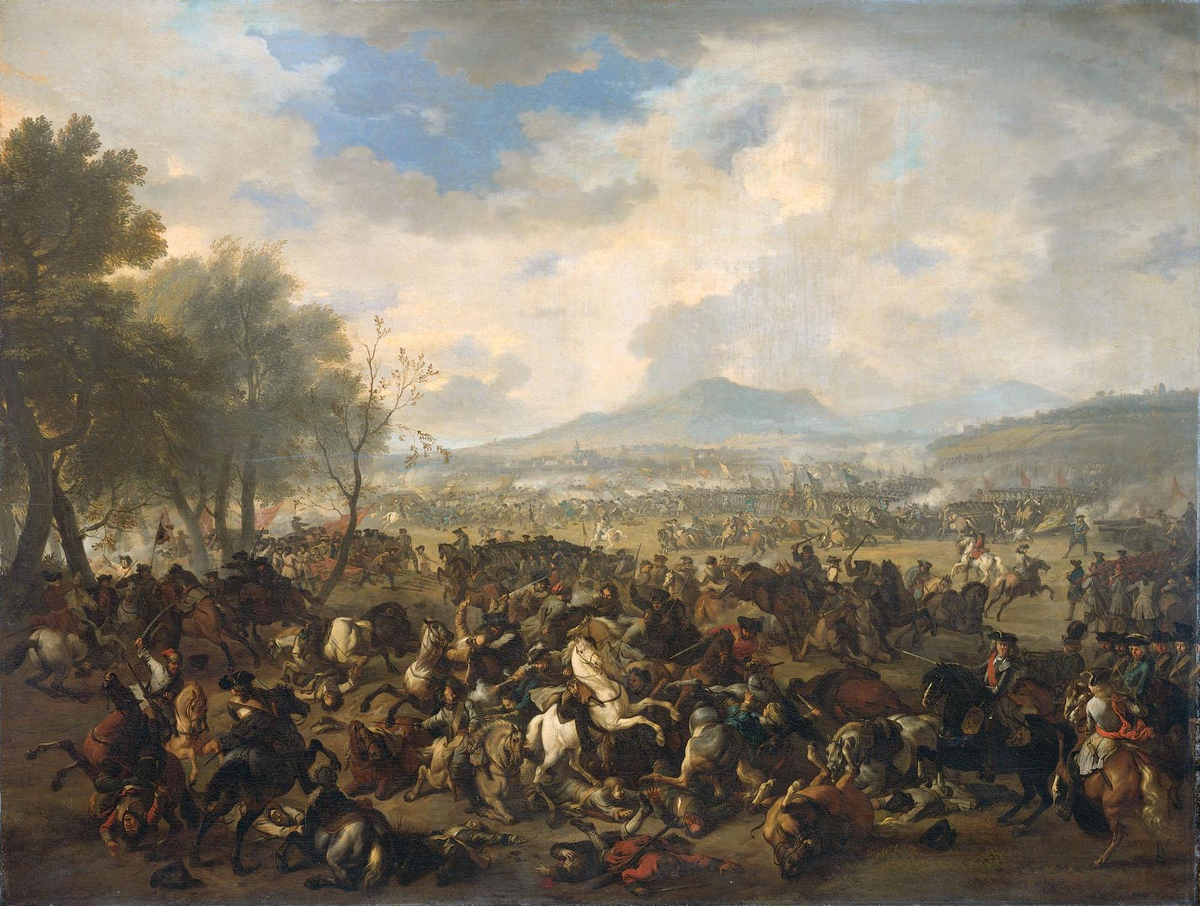
Austrian Victory at Battle of Ramillies over French
Belgium
Military
4 min read
Updated By: History Editorial Network (HEN)
Published:
In the early 18th century, during the War of the Spanish Succession, the Battle of Ramillies took place near the village of Ramillies in present-day Belgium. The French army, led by Marshal Villeroi, faced off against the Allied forces commanded by the Duke of Marlborough, representing the Grand Alliance which included England, the Dutch Republic, and the Holy Roman Empire.
The battlefield was characterized by open fields, perfect for Marlborough's tactical maneuvers. His army used a classic flanking movement to outmaneuver and encircle the French, leading to a decisive victory for the Allies. The French suffered heavy casualties, and their defeat at Ramillies was a significant blow to their military prestige and territorial ambitions.
The repercussions of the Battle of Ramillies were felt across Europe. The victory bolstered the confidence of the Allies and secured their position in the Spanish Netherlands. It also paved the way for the subsequent capture of key French strongholds in the region. The battle shifted the balance of power in the war and weakened France's position, ultimately leading to the Treaty of Utrecht in 1713, which marked the beginning of the end of French dominance in Europe.
The Battle of Ramillies is remembered as a turning point in the War of the Spanish Succession, highlighting the importance of strategic planning and decisive action on the battlefield. It remains a symbol of the resilience and determination of the Allied forces in the face of formidable opposition.
#WarofSpanishSuccession #BattleofRamillies #AlliedVictory #EuropeanHistory #TreatyofUtrecht #MilitaryStrategy

Explore the Life Moments of
 AI Twin