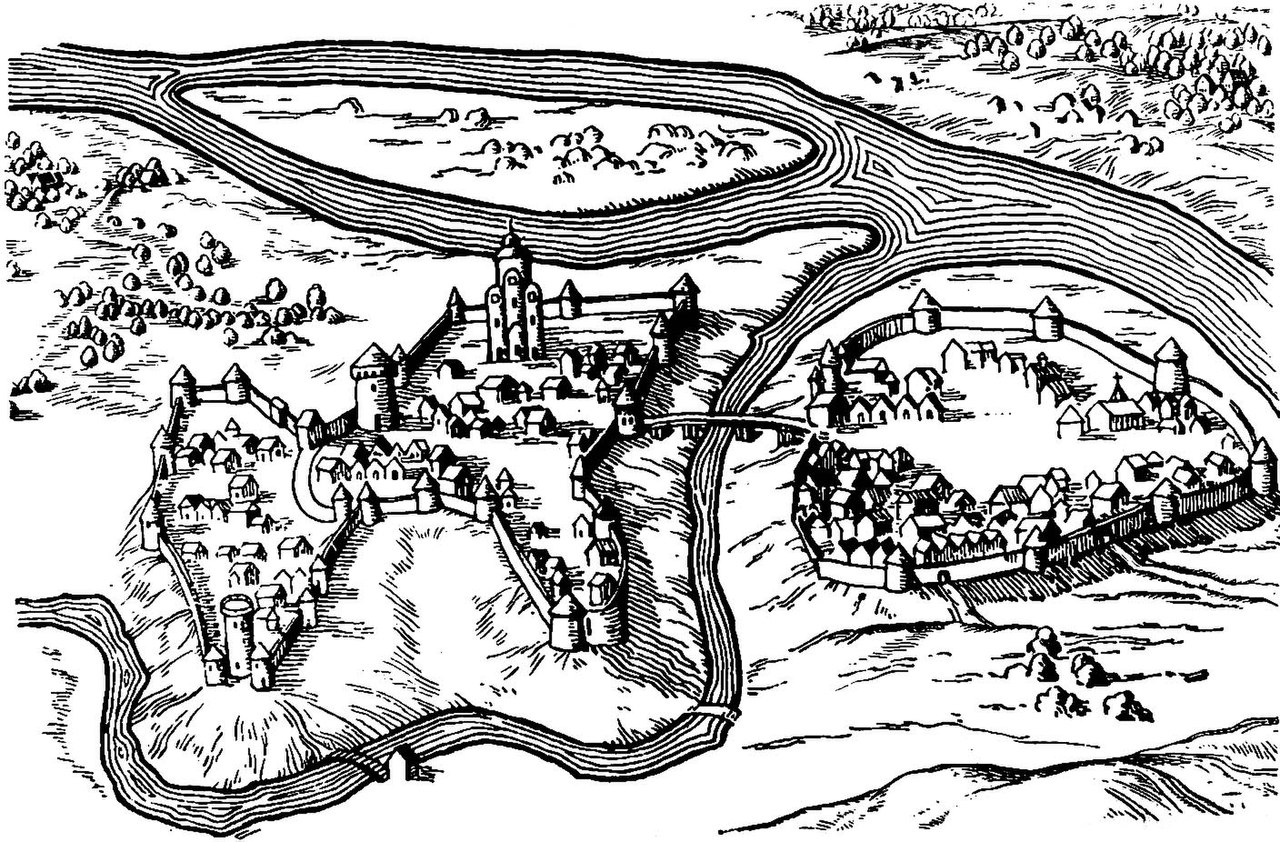
Polotsk: Major Center of Trade and Culture in Eastern Europe
Belarus
Historic City
Trade Hub
3 min read
Updated By: History Editorial Network (HEN)
Published:
In the 11th century, Polotsk emerged as a prominent hub for trade and cultural exchange in Eastern Europe. Its strategic location along the Dvina River facilitated commerce between the Baltic Sea and the Byzantine Empire. The city's flourishing trade routes attracted merchants from Scandinavia, the Middle East, and Western Europe, making it a melting pot of diverse cultures.
Polotsk's prosperity was further enhanced by the establishment of the first known library in Belarus, within the walls of St. Sophia Cathedral. This literary center played a crucial role in the dissemination of knowledge and ideas, contributing to the city's intellectual vibrancy and influence.
The cultural significance of Polotsk extended beyond its borders, as it became a center for the spread of Christianity in the region. The city's numerous churches and monasteries not only served as religious institutions but also as centers for education and artistic expression.
The establishment of Polotsk as a major center of trade and culture had a lasting impact on the development of Eastern Europe. It fostered economic growth, facilitated the exchange of goods and ideas, and enriched the region's cultural heritage. The legacy of Polotsk as a cultural and commercial powerhouse endures to this day, embodying the spirit of innovation and exchange that defined Eastern Europe in the Middle Ages.
#Polotsk #TradeHub #CulturalExchange #Belarus #HistoricCity #IntellectualCenter
Primary Reference
What to see in Polotsk: Majestic St Sophia, the treasures of St ...

Explore the Life Moments of
 AI Twin