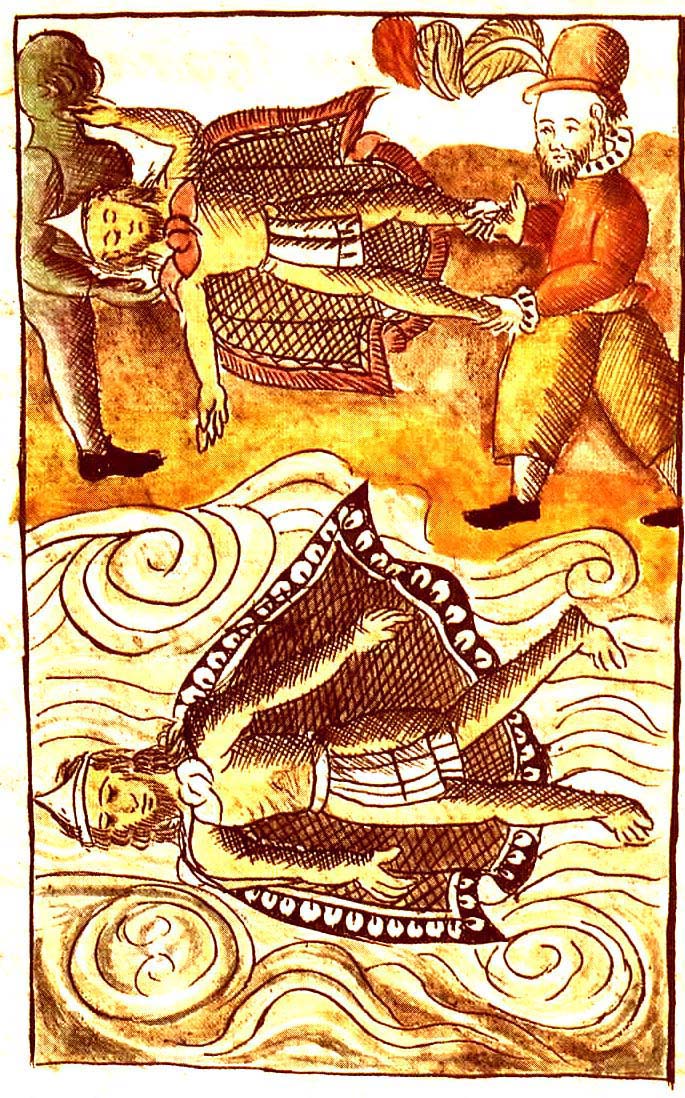
Governance of Tlatelolco and Itzquauhtzin's Death
Tlatelolco, present day Mexico City, Mexico
7 min read
Updated By: History Editorial Network (HEN)
Published:
Updated:
In 1520, the governance of Tlatelolco, the closely connected sister city of Tenochtitlán, entered a period of instability following the death of its ruler and military governor, Itzquauhtzin, during the Spanish conquest of the Aztec Empire. His death occurred amid escalating conflict between the Aztecs and the forces of Hernán Cortés, as political authority in central Mexico faced mounting pressure from warfare, internal unrest, and epidemic disease.
Tlatelolco was founded in the 14th century on the same island as Tenochtitlán in Lake Texcoco and developed into one of the largest commercial centers in Mesoamerica. Although politically subordinate to Tenochtitlán after being conquered in 1473, the city retained its own local leadership and identity. Its famous marketplace attracted thousands of merchants and played a major role in the regional economy of the Aztec Empire. By the time the Spanish arrived in 1519, Tlatelolco and Tenochtitlán were physically connected urban centers that functioned together as the imperial heart of Aztec power.
Itzquauhtzin governed Tlatelolco during the period of first contact with the Spanish. Historical sources describe him as aligned with the Aztec leadership under Moctezuma II during the early stages of the conquest. Following the outbreak of violence between Spanish forces and the inhabitants of Tenochtitlán in 1520, the political situation in both cities deteriorated rapidly. After the massacre at the Templo Mayor and the uprising against the Spanish occupation, warfare spread across the island capital and surrounding districts.
Accounts from the conquest period indicate that Itzquauhtzin was killed during the turmoil of 1520, although precise details regarding the circumstances of his death vary among historical records. His death removed an important local authority figure at a moment when military coordination and urban administration were under severe strain. Leadership in the region increasingly shifted toward military resistance under Cuitláhuac and later Cuauhtémoc as the Aztec state prepared for the full scale Spanish assault that culminated in the siege of Tenochtitlán in 1521.
During the final siege, Tlatelolco became one of the last major centers of resistance against Spanish and Indigenous allied forces. Fighting in the district was intense, and many surviving defenders regrouped there after much of Tenochtitlán had fallen. The city’s marketplace and surrounding neighborhoods were heavily damaged during the conflict. Following the capture of Cuauhtémoc on 13/08/1521, both Tenochtitlán and Tlatelolco were absorbed into the emerging Spanish colonial capital that later became Mexico City.
Historical Significance
The death of Itzquauhtzin reflected the wider breakdown of Aztec political leadership during the conquest period. Tlatelolco’s transition from commercial center to final defensive stronghold illustrated how urban governance in the Aztec capital shifted rapidly from administration and trade toward survival and military resistance during the final years of the empire.
#mooflife
#MomentOfLife
#Tlatelolco
#Itzquauhtzin
#Cuauhtlatoani
#TripleAlliance
#SpanishConquest
Primary Reference
Aztecs

Explore the Life Moments of
 AI Twin