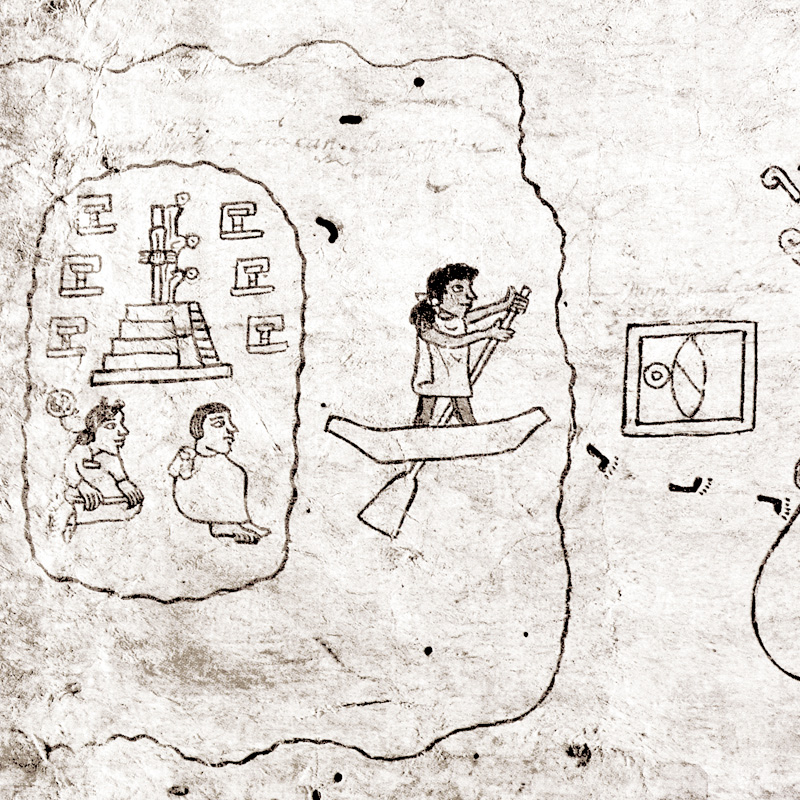
Formation of the Aztec Empire
Valley of Mexico, Central Mexico, Mexico
Civilizations
Mesoamerican Studies
8 min read
Updated By: History Editorial Network (HEN)
Published:
Updated:
The year 1427 marked a decisive political transformation in central Mexico that led directly to the emergence of the Aztec Empire. Until this period, the Mexica people of Tenochtitlán remained subordinate to the Tepanec state centered at Azcapotzalco, one of the dominant powers in the Valley of Mexico during the early 15th century. The collapse of Tepanec authority after 1427 reshaped regional politics and created the conditions for the rapid expansion of Mexica influence across Mesoamerica.
During the late 14th and early 15th centuries, Azcapotzalco controlled a powerful tributary network under the rule of the Tepanec leader Tezozomoc. The Mexica of Tenochtitlán served as military allies and tributaries within this system, providing soldiers and tribute payments in exchange for political protection and limited autonomy. Although Tenochtitlán had grown economically and militarily, it remained politically dependent on Tepanec power.
The situation changed dramatically after the death of Tezozomoc in approximately 1426. A succession crisis emerged within the Tepanec state when Maxtla, ruler of Coyoacán and son of Tezozomoc, seized control of Azcapotzalco. Maxtla moved aggressively against rival factions and sought to weaken Tenochtitlán, viewing the increasingly powerful Mexica as a threat. According to later Nahua chronicles, tensions escalated after Maxtla humiliated and threatened the Mexica ruler Chimalpopoca, who died during the conflict under circumstances that remain debated by historians.
In response, the Mexica leadership under Itzcoatl forged alliances with other city-states opposed to Tepanec rule. The most important partnership formed between Tenochtitlán and Texcoco, whose exiled ruler Nezahualcoyotl sought to reclaim his throne from Tepanec influence. Tlacopan, another Tepanec city dissatisfied with Maxtla’s rule, later joined the coalition. Together, these forces launched military campaigns against Azcapotzalco beginning around 1427.
The coalition succeeded in defeating the Tepanecs after a series of battles that culminated in the destruction of Azcapotzalco in 1428. This victory ended Tepanec regional dominance and fundamentally altered the balance of power in central Mexico. Following the conflict, Tenochtitlán, Texcoco, and Tlacopan formalized their alliance in what became known as the Triple Alliance. Although initially conceived as a military and political partnership, the alliance soon evolved into the imperial structure commonly identified as the Aztec Empire.
Under the Triple Alliance system, conquered territories across central and southern Mesoamerica paid tribute in goods, labor, textiles, food, weapons, and luxury materials. Tenochtitlán gradually became the dominant partner within the alliance, especially during the reigns of rulers such as Moctezuma I, Axayacatl, Ahuitzotl, and Moctezuma II. Over the following decades, the empire expanded across large parts of present-day Mexico through warfare, diplomacy, and tribute relationships.
The events beginning in 1427 also transformed Tenochtitlán itself. Military success increased wealth, population growth, monumental construction, and political centralization within the city. Temples, marketplaces, canals, and administrative systems expanded rapidly as the Mexica capital emerged as one of the largest urban centers in the pre-Columbian Americas.
Historical Significance
The defeat of Tepanec power after 1427 marked the transition of the Mexica from tributary subordinates into imperial rulers. The political alliances and military victories of this period laid the foundation for the Aztec Empire, which became the dominant force in central Mexico until the Spanish conquest nearly a century later.
#mooflife
#MomentOfLife
#AztecEmpire
#Mesoamerica
#Tenochtitlan
#Tetzcoco
#Tlacopan
Primary Reference
Aztec Empire

Explore the Life Moments of
 AI Twin