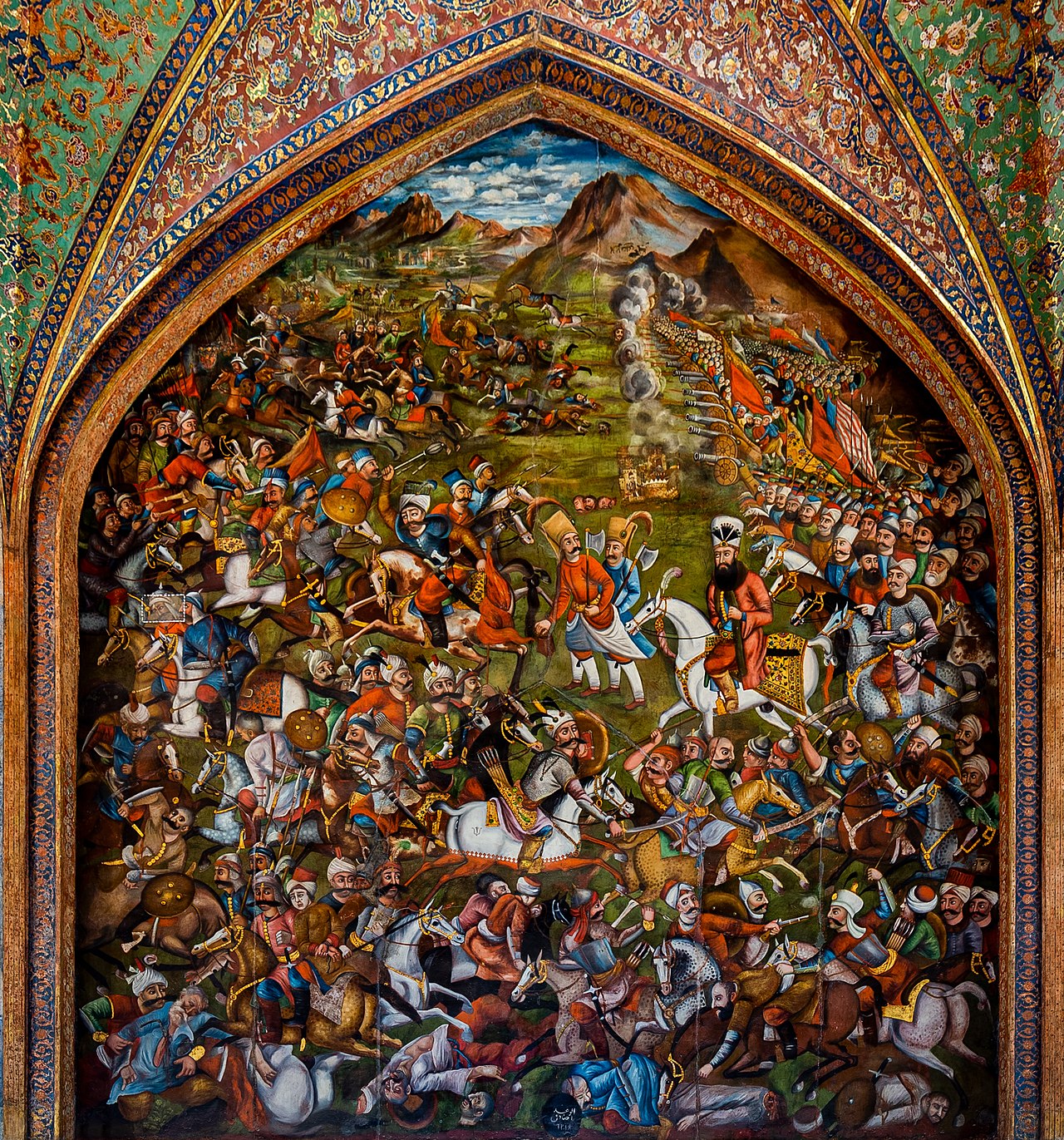
Ottoman Empire's Victory at Chaldiran Battle
Azerbaijan

Political
Geopolitical Shifts
4 min read
Updated By: History Editorial Network (HEN)
Published:
After the decisive Battle of Chaldiran, the Ottoman Empire secured control over Azerbaijan, marking a pivotal shift in the region's power dynamics. The conflict arose due to territorial disputes and religious differences between the Ottoman and Safavid Empires. The Safavids, led by Shah Ismail I, sought to spread Twelver Shia Islam, challenging the Sunni Ottoman rule.
The Battle of Chaldiran unfolded near the Chaldiran town in northwestern Iran. The Ottoman army, equipped with firearms and artillery, clashed with the Safavid forces known for their expertise in cavalry warfare. Despite the Safavids' fierce resistance, the Ottomans' advanced weaponry proved decisive. Shah Ismail I suffered a significant loss, compelling him to retreat and relinquish control over Azerbaijan to the Ottomans.
The Ottoman Empire's domination of Azerbaijan after the Battle of Chaldiran reshaped the geopolitical landscape of the region. It allowed the Ottomans to exert influence over trade routes, resources, and strategic territories. Furthermore, the Ottoman control brought about a period of relative stability and economic prosperity to Azerbaijan.
The aftermath of the Battle of Chaldiran solidified the Ottoman Empire's position as a formidable regional power, extending its reach into the Caucasus and beyond. The Safavids, although weakened, continued to govern Persia but had to acknowledge the Ottoman superiority in Azerbaijan.
The Battle of Chaldiran underscored the complex interplay of political, religious, and military factors shaping the history of Azerbaijan and the broader Middle East. It highlighted the enduring rivalry between the Ottoman and Safavid Empires for dominance in the region.
#OttomanEmpire #AzerbaijanHistory #BattleOfChaldiran #GeopoliticalShifts

Explore the Life Moments of
 AI Twin