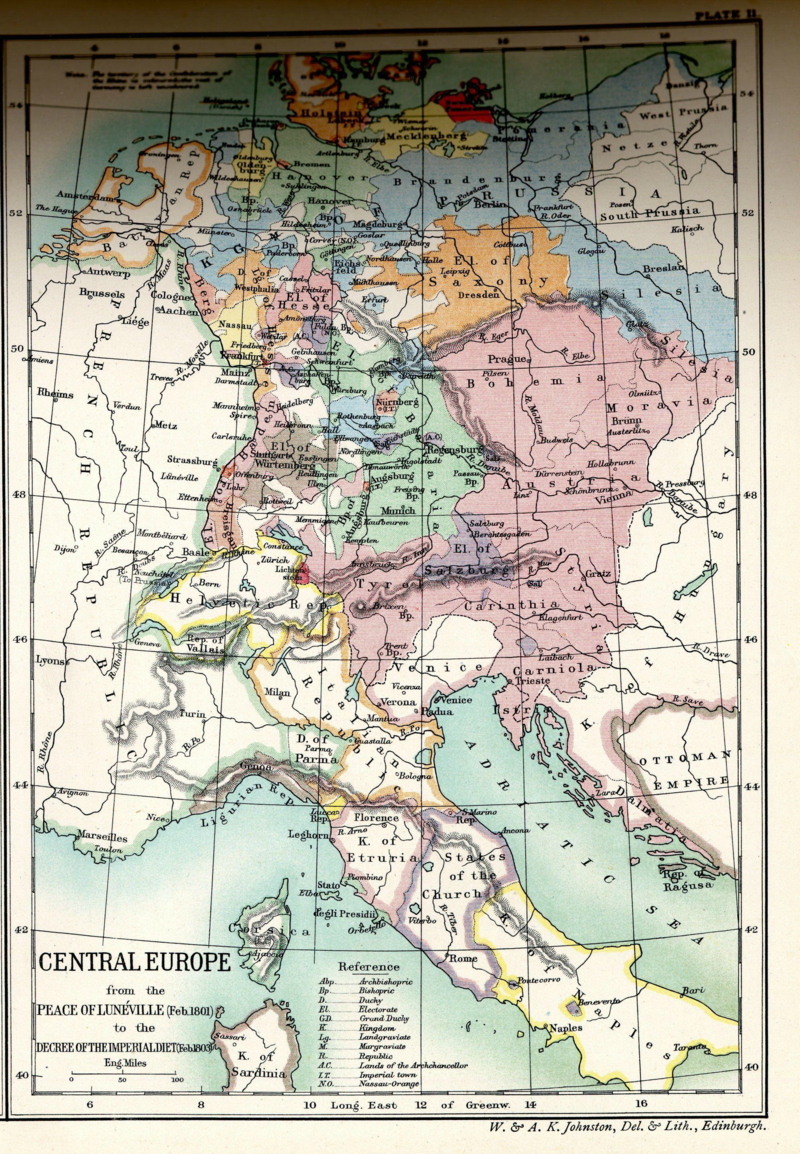
Treaty of Lunéville ended the conflict between France and the Holy Roman Empire, solidifying French dominance in Europe.
Austria
Political
European Politics
3 min read
Updated By: History Editorial Network (HEN)
Published:
Amidst the War of the Second Coalition, France and Francis II, Holy Roman Emperor, reached a pivotal moment when they signed the Treaty of Lunéville, marking the end of their conflict. This treaty, following the earlier Treaty of Campo Formio, solidified France's dominance in Europe and recognized French territorial gains. For Francis II, the treaty meant relinquishing control over various regions and accepting the significant losses incurred by the Holy Roman Empire.
The Treaty of Lunéville reshaped the political landscape of Europe, diminishing the power and influence of the Holy Roman Empire while elevating France's position as a dominant force on the continent. With this treaty, France further solidified its control over territories gained during the French Revolutionary Wars, marking a significant shift in the balance of power in Europe.
As a result of the Treaty of Lunéville, Francis II was forced to cede significant territories to France, further weakening his authority as Holy Roman Emperor. The treaty also paved the way for a period of relative stability in Europe following years of war and conflict.
#TreatyofLunéville #WaroftheSecondCoalition #France #FrancisII #HolyRomanEmpire #Austria #EuropeanPolitics

Explore the Life Moments of
 AI Twin